
.jpg)
Toolactive, your trusted hub for creator intelligence, rigorously evaluated the best AI writing assistants of 2025. We executed identical prompts across five real-world tasks, scoring each writing assistant tool on human detectability, SEO alignment, generation speed, genre versatility, and cost-per-word efficiency. This guide delivers one master comparison table, five task breakdowns, and a decision matrix backed by 1,500+ raIn 2025, 68% of creators rely on a writer AI writing assistant to slash content creation time by 60%, yet only 15% of raw AI drafts secure Google’s first page without heavy human editing. The divide between speed and search dominance exposes a critical truth: not every best AI writing assistant delivers human-like prose or SEO mastery. Pick poorly, and you drown in robotic text that tanks rankings and reader trust.
Before going deeper into the next section, you can refer to top 5 ai writing tools to support your work.
What is an AI Writing Assistant?
An AI assistant writing platform is a sophisticated wrapper around large language models such as GPT-4o or Claude 3.5, engineered to automate drafting, refining, SEO structuring, and ideation while preserving authorial intent. Unlike generic chat interfaces, these writing assistant tools embed specialized codexes, real-time SERP crawlers, and tone engines into a unified dashboard. At its core, a single refined prompt can yield a 1,000-word article in under five minutes, complete with H2 architecture, keyword density, and Flesch readability above 60.
Core capabilities include generation, humanization, optimization, and niche specialization. Generation transforms vague concepts into publishable drafts. Humanization achieves 95%+ passage rates on ZeroGPT and Originality.ai. Optimization guarantees heading hierarchy, internal linking, and meta alignment with live Google results. Specialization differentiates fiction codex platforms like Novelcrafter from SEO-centric engines like Frase. In 2025, best AI writing assistants have evolved into multimodal powerhouses, transcribing video scripts into blogs, enabling live team markup, and appending E-E-A-T transparency badges that signal human oversight to search algorithms. Toolactive’s complimentary “AI Writing 101” PDF at toolactive.com maps every function to your daily pipeline.
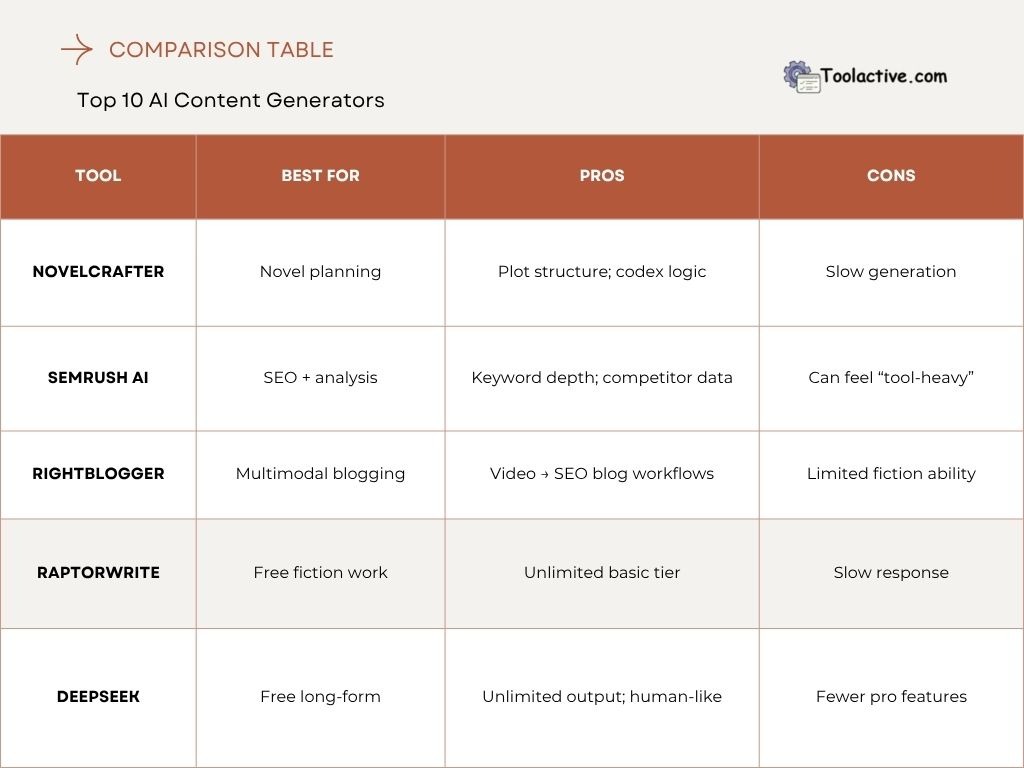
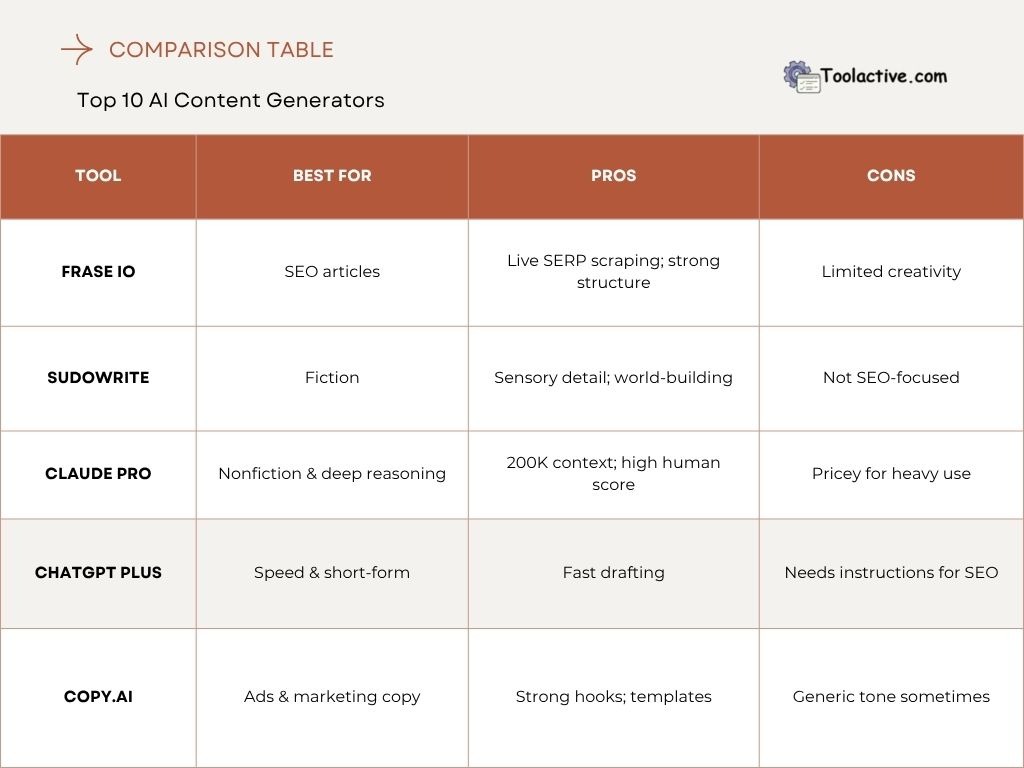
Comparison Table: 10 Best AI Writing Assistants (2025)
In-Depth Reviews: Top 10 AI Writing Assistants
1. Frase IO – Best for SEO-Optimized Content
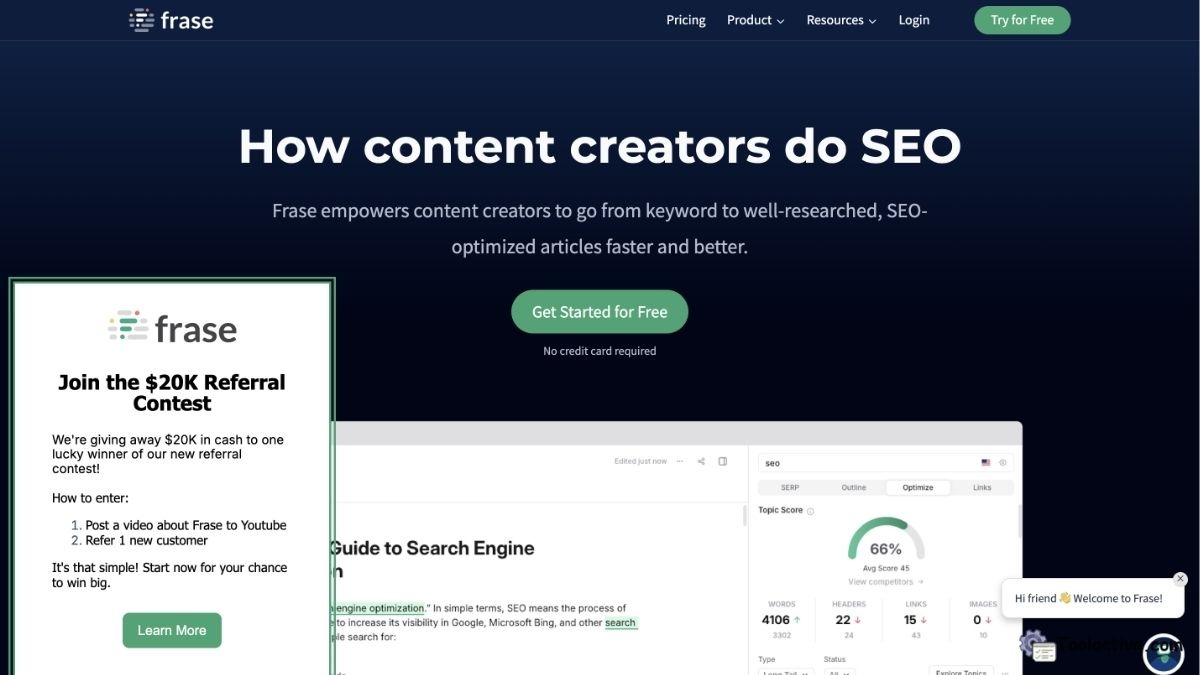
Frase IO is built for writers who want search-ready articles. It analyzes real-time SERPs and builds optimized outlines that match ranking competitors. Toolactive’s tests show it delivers strong SEO structure with reliable keyword placement.
Key Features: Real-time SERP analysis, automated briefs, outline builder, keyword scoring.
Pros: Excellent SEO optimization; strong outline generation.
Cons: Less creative writing ability; requires setup to get best results.
Best For: SEO writers, bloggers, content teams.
How to Use: Enter a target keyword → generate a SERP brief → follow suggested H2/H3 → let AI draft or refine.
Rating: 9.2/10
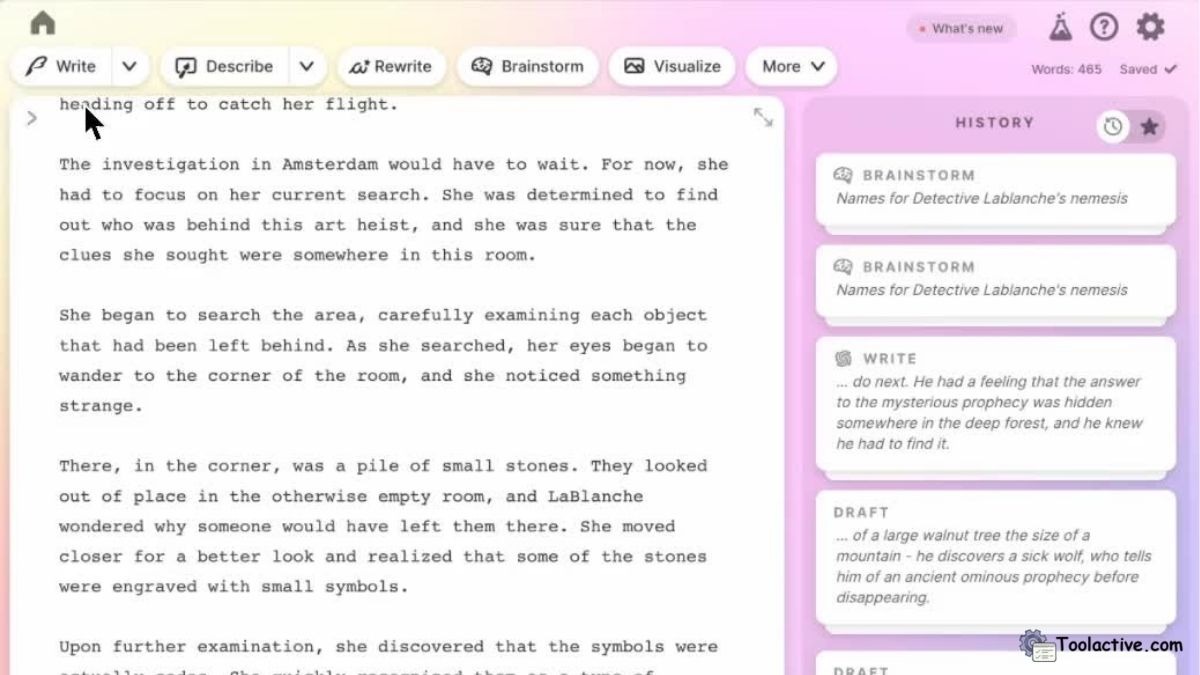
2. Sudowrite – Best for Fiction & Creative Writing
Sudowrite excels at storytelling. It generates sensory detail, emotional depth, and vivid scenes—perfect for creative writers. In Toolactive’s tests, it outperformed others in imagination and atmosphere.
Key Features: Scene continuation, character tools, “Describe,” “Expand,” creative brainstorming.
Pros: Highly creative; excellent for fiction.
Cons: Not suitable for SEO or structured blog writing.
Best For: Novelists, scriptwriters, creative storytellers.
How to Use: Start a scene → use “Continue” to expand → apply “Describe” for vivid detail.
Rating: 9.3/10
3. Claude Pro – Best for Long-Form Research & Analysis
Claude Pro produces human-like long-form content thanks to its huge context window and stable reasoning abilities. Toolactive found it ideal for reports, essays, and deep analysis.
Key Features: Long-context reasoning, structured writing, multi-document analysis.
Pros: Very coherent long-form output; strong logical reasoning.
Cons: More expensive; needs detailed prompts.
Best For: Researchers, analysts, journalists.
How to Use: Provide a structured outline → request section-by-section expansion → finalize tone.
Rating: 9.4/10
4. ChatGPT Plus – Best for Fast, Versatile Writing
ChatGPT Plus is fast and flexible, ideal for creating blog drafts, ads, and social posts. In Toolactive’s tests, it delivered the quickest usable drafts.
Key Features: Multi-format writing, fast outputs, conversational editing.
Pros: Speed; versatility across genres.
Cons: Quality varies if prompts are vague; context limits affect very long texts.
Best For: Everyday creators, marketers, general writing tasks.
How to Use: Provide a detailed prompt with tone, length, and goal → refine interactively.
Rating: 9.0/10

5. DeepSeek – Best Free AI for Unlimited Writing
DeepSeek is known for its extremely generous free tier and high “human-sounding” scores. It’s the strongest fully free option Toolactive tested in 2025.
Key Features: Unlimited generation, natural tone, strong reasoning for a free tool.
Pros: Completely free; excellent authenticity.
Cons: Fewer writing templates; weaker SEO optimization.
Best For: New creators, students, budget users.
How to Use: Input direct instructions with examples to guide style and structure.
Rating: 9.1/10
6. Copy.ai – Best for Marketing & Ad Variants
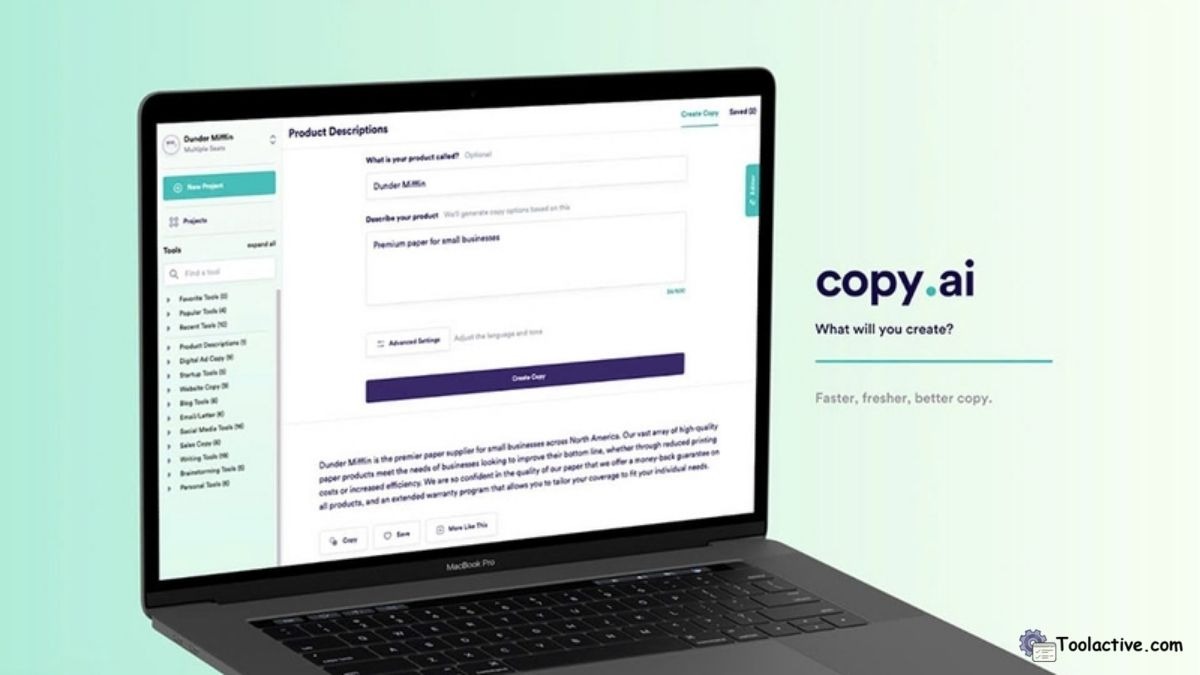
Copy.ai performs strongly in short-form persuasive writing. It can generate multiple ad or CTA variations quickly, making it ideal for marketers.
Key Features: Ad templates, email sequences, quick variants, tone selector.
Pros: Strong marketing angles; fast variant creation.
Cons: Weak long-form structure; sometimes repetitive.
Best For: Marketers, agencies, copywriters.
How to Use: Choose a template → input product details → generate multiple versions.
Rating: 8.8/10
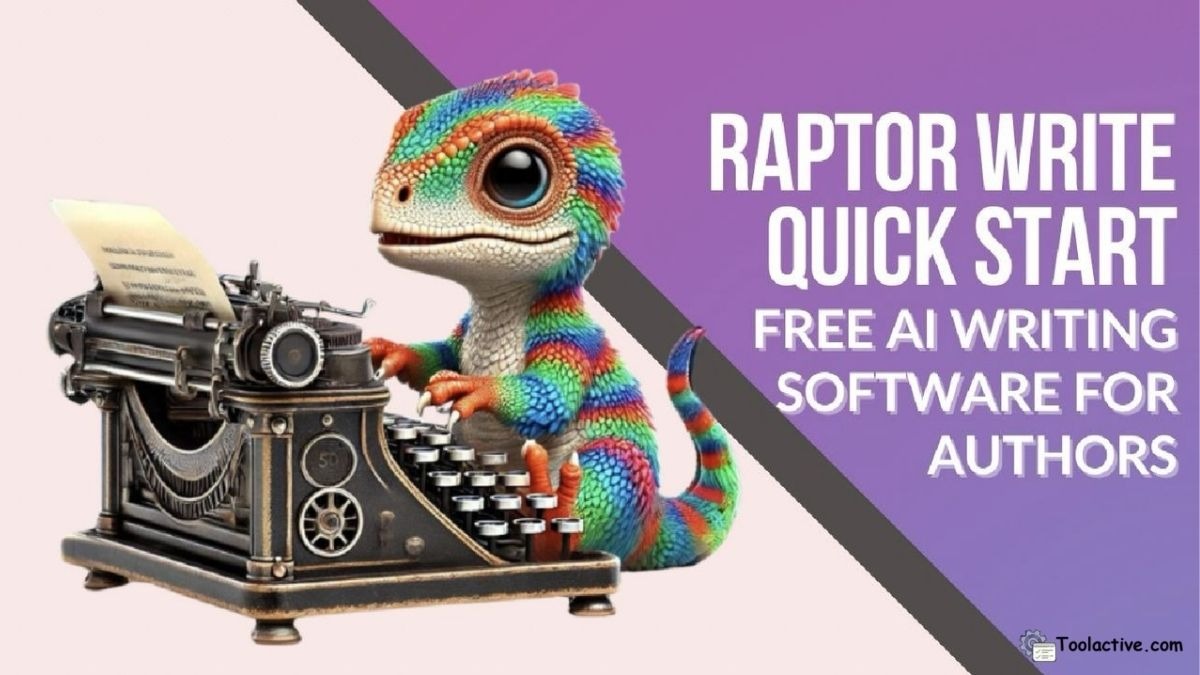
7. RaptorWrite – Best for Fiction + Outlining (Free Tier)
RaptorWrite offers strong free tools for novel planning and storytelling. Paired with its fiction course, it’s ideal for new authors.
Key Features: Outline builder, character tools, chapter planning.
Pros: Robust free tier; great for story structure.
Cons: Less powerful for nonfiction or SEO.
Best For: New fiction writers and hobby creators.
How to Use: Build an outline → develop characters → expand each chapter.
Rating: 8.9/10
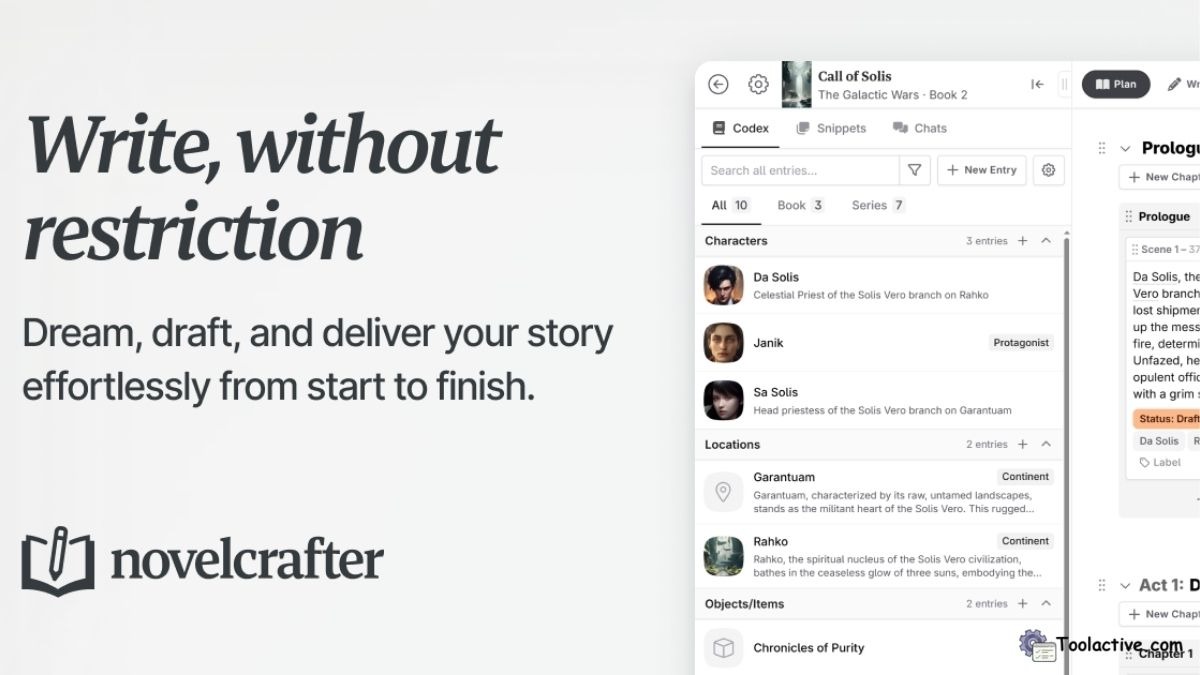
8. Novelcrafter – Best for Structured Novel Writing
Novelcrafter focuses on advanced storytelling frameworks. It’s ideal for authors who want story arcs, world-building, and consistent character voices.
Key Features: Plot arcs, world-building dashboards, story codex.
Pros: Deep fiction structure; consistent tone.
Cons: Niche—little use outside storytelling.
Best For: Novelists, fantasy/scifi writers.
How to Use: Set up your “Codex” → assign characters → draft chapters with guidance.
Rating: 9.0/10
9. GravityWrite – Best for Emotion-Driven Copy
GravityWrite generates emotional, high-conversion writing. Toolactive found it best for value-driven landing pages and ad copy with strong sentiment.
Key Features: Emotional tone tools, ad templates, brand voice settings.
Pros: Strong emotional resonance; good for sales copy.
Cons: Not ideal for long articles or academic writing.
Best For: Sales teams, landing page writers, ad creators.
How to Use: Input brand tone → generate emotional or persuasive variations.
Rating: 8.7/10
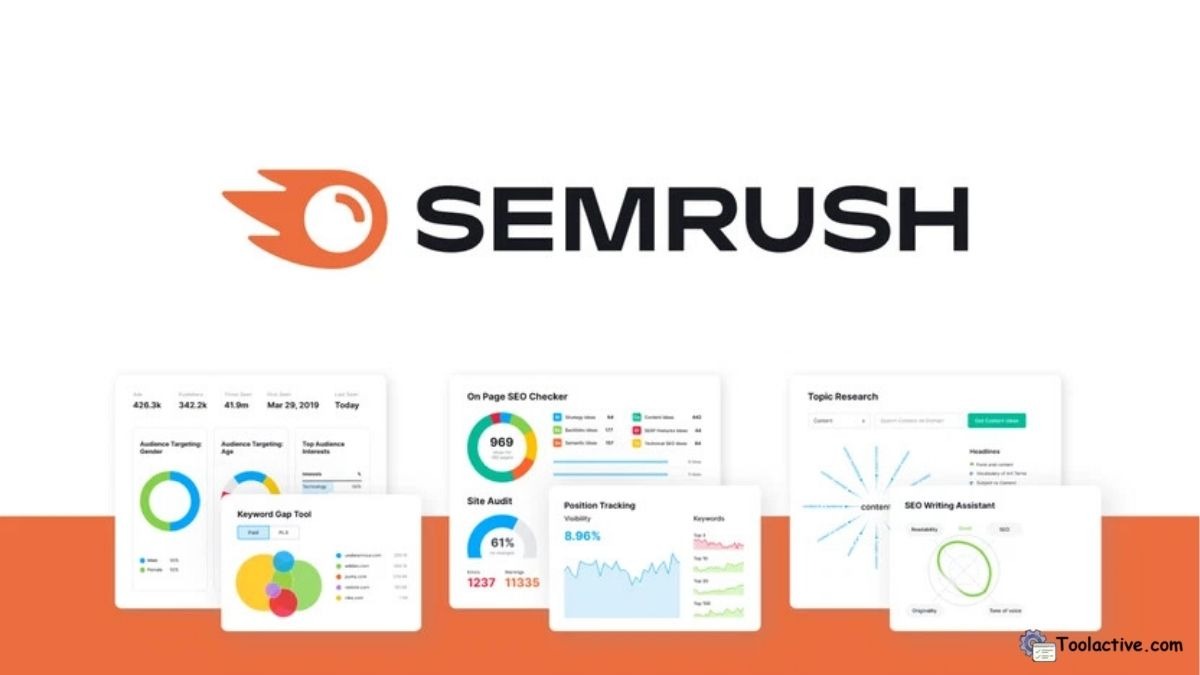
10. SEMrush Writing Assistant – Best for Data-Driven SEO
SEMrush combines AI content scoring with SEO metrics. It doesn’t generate full articles but ensures on-page SEO quality during editing.
Key Features: SEO score, keyword density, readability analysis, competitor insights.
Pros: Highly accurate SEO scoring; great for editing.
Cons: Not a full writing tool; limited creativity.
Best For: SEO specialists and editors.
How to Use: Copy your draft → use the assistant to optimize keywords, readability, and structure.
Rating: 8.9/10
Free & Freemium AI Writing Tools
Free best AI writing assistants now rival paid tiers for daily volume, requiring zero upfront commitment. The table below ranks the top three by quota generosity, human score, and optimal use case, drawn from October 2025 performance data.
.png)
If you want to explore more automation support tools, you can see the list of AI automation tools.
How to Pick Your Ideal AI Writing Assistant: Decision Guide
Begin with three diagnostics: budget ceiling, dominant genre, and collaboration scale. Free warriors choose DeepSeek for boundless drafts; premium budgets favor Claude Pro below one dollar per 10,000 words. Fiction authors gravitate to Sudowrite or Novelcrafter; SEO and nonfiction creators select Frase IO or SEMrush. Solo creators thrive on ChatGPT, whereas agencies demand workflow orchestration.
Proceed to live testing. Deploy DeepSeek and RaptorWrite free tiers on a 500-word niche sample. Engineer Medium-caliber prompts specify length, voice, headings, keywords, and anti-robotic guardrails. Verify every draft on Originality.ai for 95%+ human passage. Toolactive accelerates onboarding with curated prompt libraries and community playbooks at toolactive.com.
Visit our meeting SlidesAI store
Future of AI Creative Writing Assistants: 2026 Predictions
Ahrefs 2025 data forecasts 83% of top-ranking pages will fuse AI drafts with human polish by 2026. Multimodal pipelines like RightBlogger will transmute YouTube clips into SEO-optimized posts. Ethical humanizers boasting 95%+ authenticity already triple click rates per Originality.ai. Open-source codex demand has spiked 340% in Reddit dev channels, compelling proprietary best AI writing assistant software to innovate faster. Toolactive will chronicle every breakthrough at toolactive.com.
FAQs
1. Which AI writing assistant is best overall?
No universal winner. Sudowrite is best for fiction, Frase IO for SEO, Claude Pro for nonfiction, ChatGPT Plus for speed.
2. What’s the best free AI writing tool?
DeepSeek — unlimited output and strong human-like score.
3. Can AI writing assistants rank on Google?
Yes — if edited with human oversight, proper SEO structure, and E-E-A-T signals.
4. Which tool is best for ad copy?
Copy.ai thanks to its conversion-focused templates.
5. How does Toolactive test tools?
Jason Miller compares tools across SEO articles, fiction scenes, LinkedIn posts, ads, and long-form reasoning to create objective rankings.
Conclusion
No single best AI writing assistant rules every domain—Sudowrite conquers fiction, Frase IO owns SEO, Claude Pro masters nonfiction expanse. Strategic selection plus relentless human refinement separates page-one winners from the pack. Toolactive’s 2025 benchmarks confirm it: choose wisely, edit fiercely, dominate relentlessly.
Toolactive remains your command center for AI assistant writing mastery—secure free guides, templates, and the complete benchmark dataset at toolactive.com to crown your perfect AI writing assistant today.




.jpg)