


Marketing today moves at the speed of data. Campaigns are no longer just creative - they’re calculated, AI-driven, and strategically optimized. The secret behind successful brands like HubSpot, Nike, or Shopify? They use powerful marketing management tools to orchestrate content, campaigns, and collaboration seamlessly. If you’re still juggling spreadsheets and endless email threads, you’re not competing - you’re surviving.
In this guide, we’ll break down the best marketing management tools for 2025, explore their real-world impact, and help you choose the right one to supercharge your marketing engine.
Before going deeper into the next section, you can refer to best content marketing tools to support your work.
1. What Is a Marketing Management Tool?
A marketing management tool is software that helps marketing teams plan, execute, monitor, and analyze campaigns in one place. It centralizes project management, campaign analytics, and content creation - saving time while improving accuracy and collaboration.
1.1 The Evolution of Marketing Tools
The early 2010s saw marketing teams using separate platforms for email, analytics, and project planning. Now, AI and automation have merged these features into unified ecosystems like HubSpot, Asana, and Monday.com - tools that don’t just organize tasks but also predict campaign outcomes and recommend next steps.
1.2 Why It Matters in 2025
With the rise of AI-driven marketing, consumer behavior shifts faster than ever. Real-time insights, predictive analytics, and automated workflows are no longer optional - they’re essential for competitive advantage.
2. Key Benefits of Using a Marketing Management Tool
2.1 Centralized Workflow Management
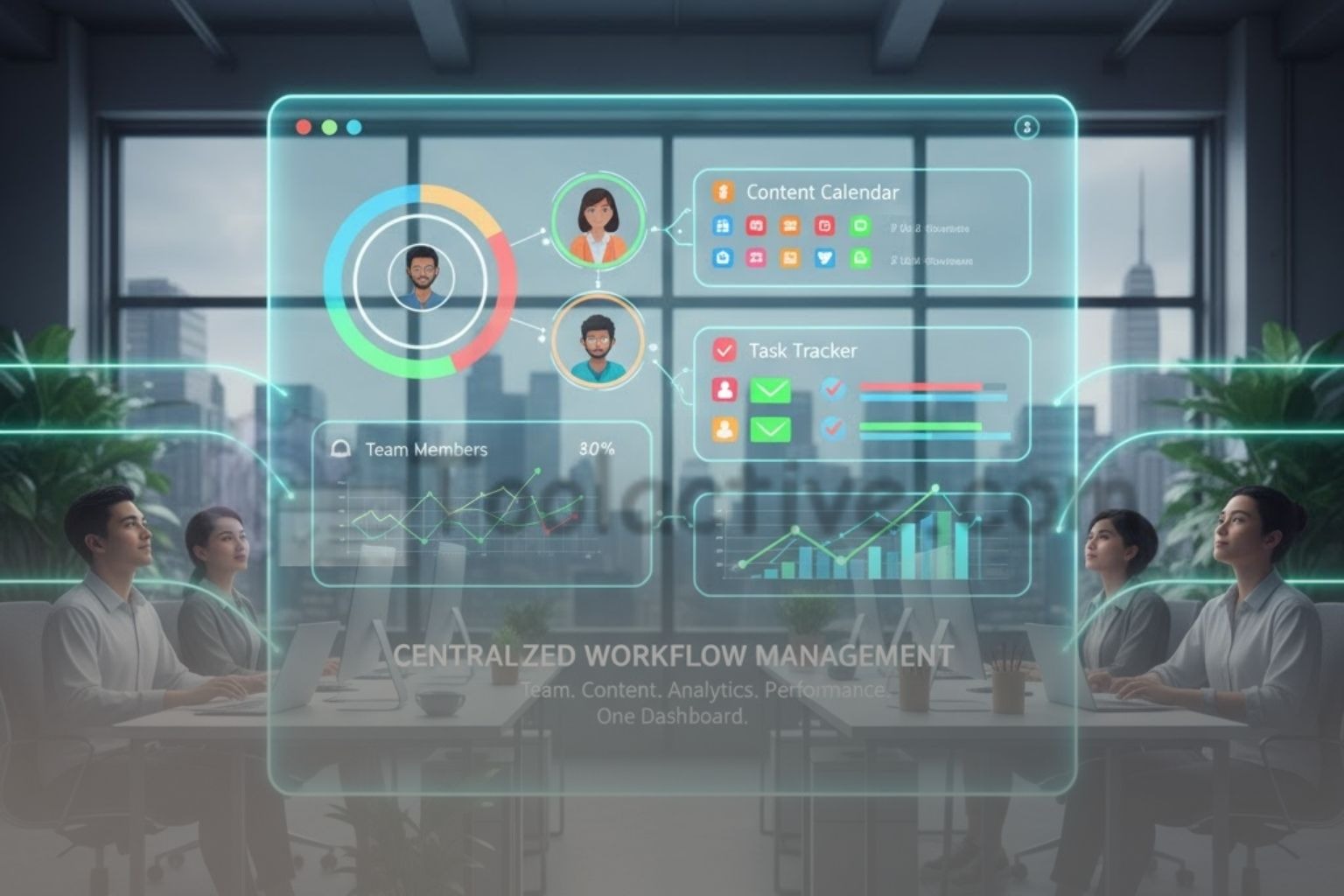
A marketing management tool eliminates chaos. It brings your team, content, analytics, and performance tracking under one dashboard - ensuring no task or campaign gets lost in the mix.
2.2 Smarter Decision-Making with AI
Today’s tools use AI to analyze performance data, detect trends, and even suggest improvements for better ROI. Marketers no longer rely on guesswork - every decision is data-backed.
2.3 Improved Collaboration and Transparency
Distributed teams can collaborate seamlessly. Whether you’re working remotely or across departments, real-time task updates and approval systems keep everyone aligned.
2.4 Scalable Growth
From startups to global enterprises, these platforms scale with your needs - integrating CRM, email marketing, SEO, and social media into one connected strategy.
Finding the perfect marketing management tool depends on your team’s size, workflow, and goals. Below are five of the most powerful and versatile platforms marketers rely on in 2025 - each offering unique strengths for managing campaigns, optimizing collaboration, and leveraging AI for better decision-making.
3. Top Marketing Management Tools for 2025
Finding the perfect marketing management tool depends on your team’s size, workflow, and goals. Below are five of the most powerful and versatile platforms marketers rely on in 2025 - each offering unique strengths for managing campaigns, optimizing collaboration, and leveraging AI for better decision-making.
3.1 HubSpot Marketing Hub
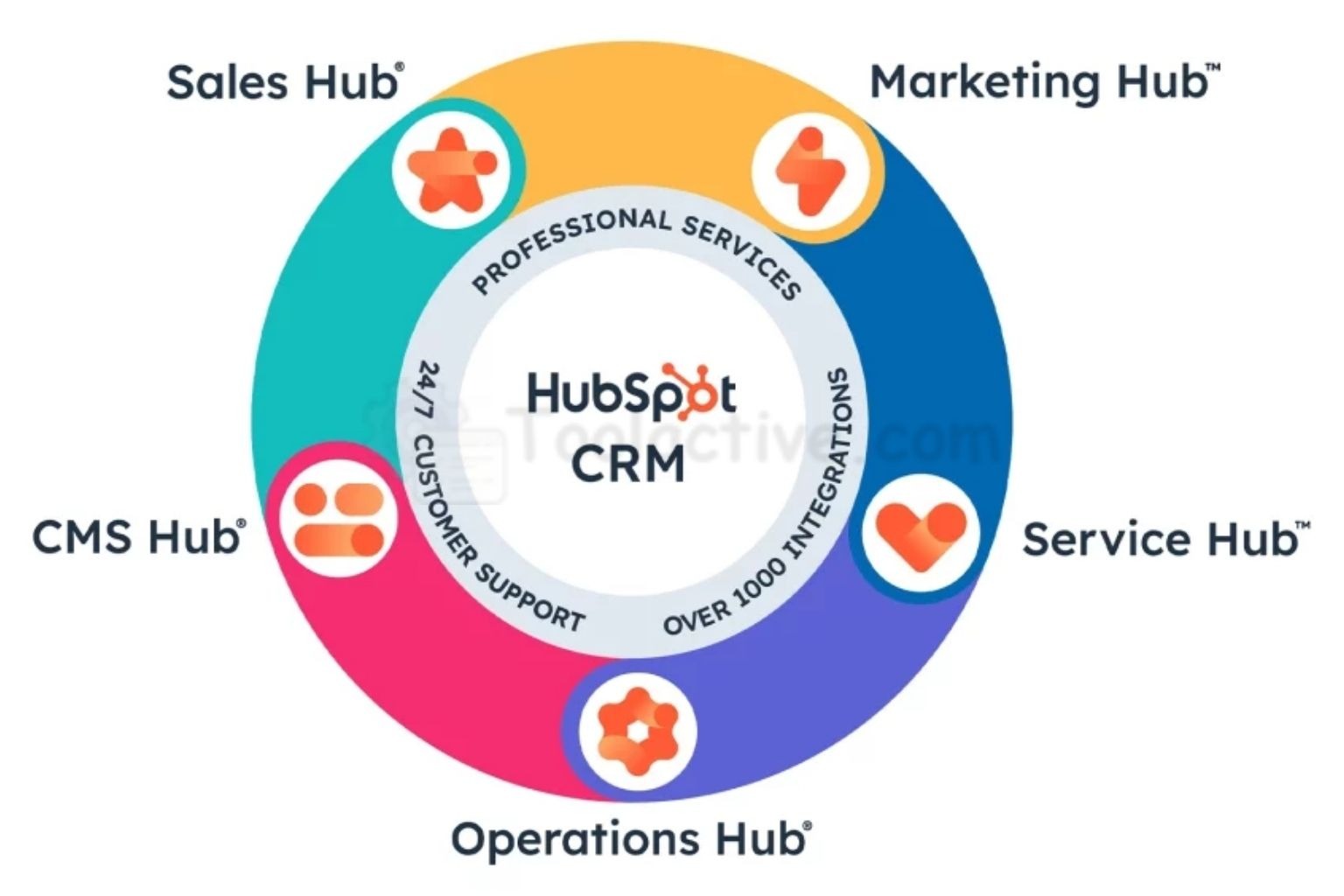
HubSpot Marketing Hub stands as one of the most comprehensive and scalable marketing management platforms in 2025. Designed for growing teams and enterprises, it combines CRM, automation, analytics, and AI-driven personalization into a unified ecosystem.
The platform allows you to manage your entire marketing funnel - from lead generation to conversion tracking - with effortless integration into sales and customer service tools. HubSpot’s AI content assistant helps craft personalized emails, optimize send times, and even generate content outlines based on audience behavior.
What I love most about HubSpot is how seamlessly it integrates all marketing operations. Whether you’re tracking campaigns, nurturing leads, or running A/B tests, it’s all connected in one dashboard.
What you’ll like:
-
All-in-one CRM and marketing automation with AI support
-
Excellent lead tracking and performance analytics
-
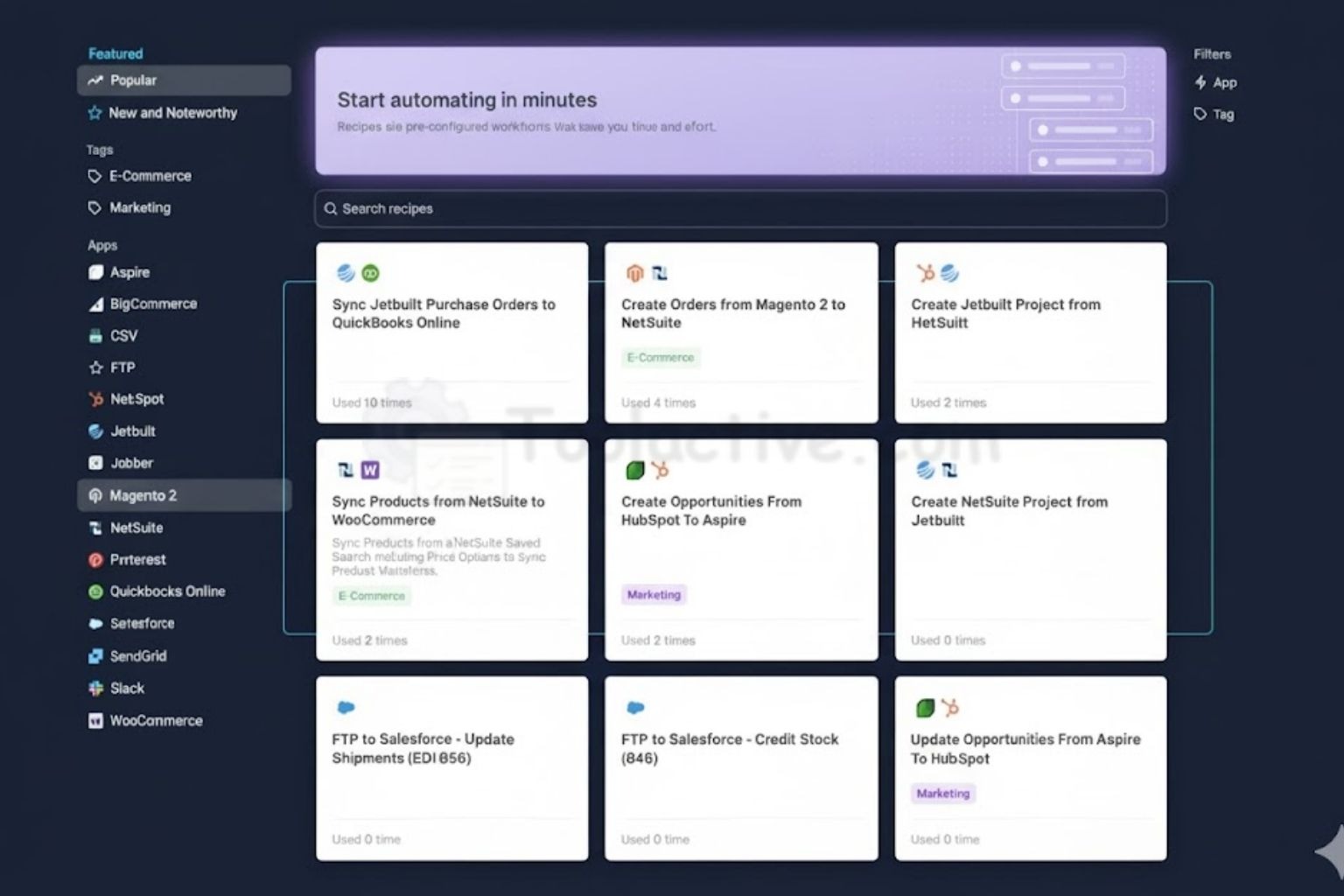
Pre-built automation templates for emails and workflows
-
Native integration with thousands of apps (Salesforce, Slack, Google Ads)
What you may not like:
-
Steeper learning curve for beginners
-
Premium plans can be expensive for smaller businesses
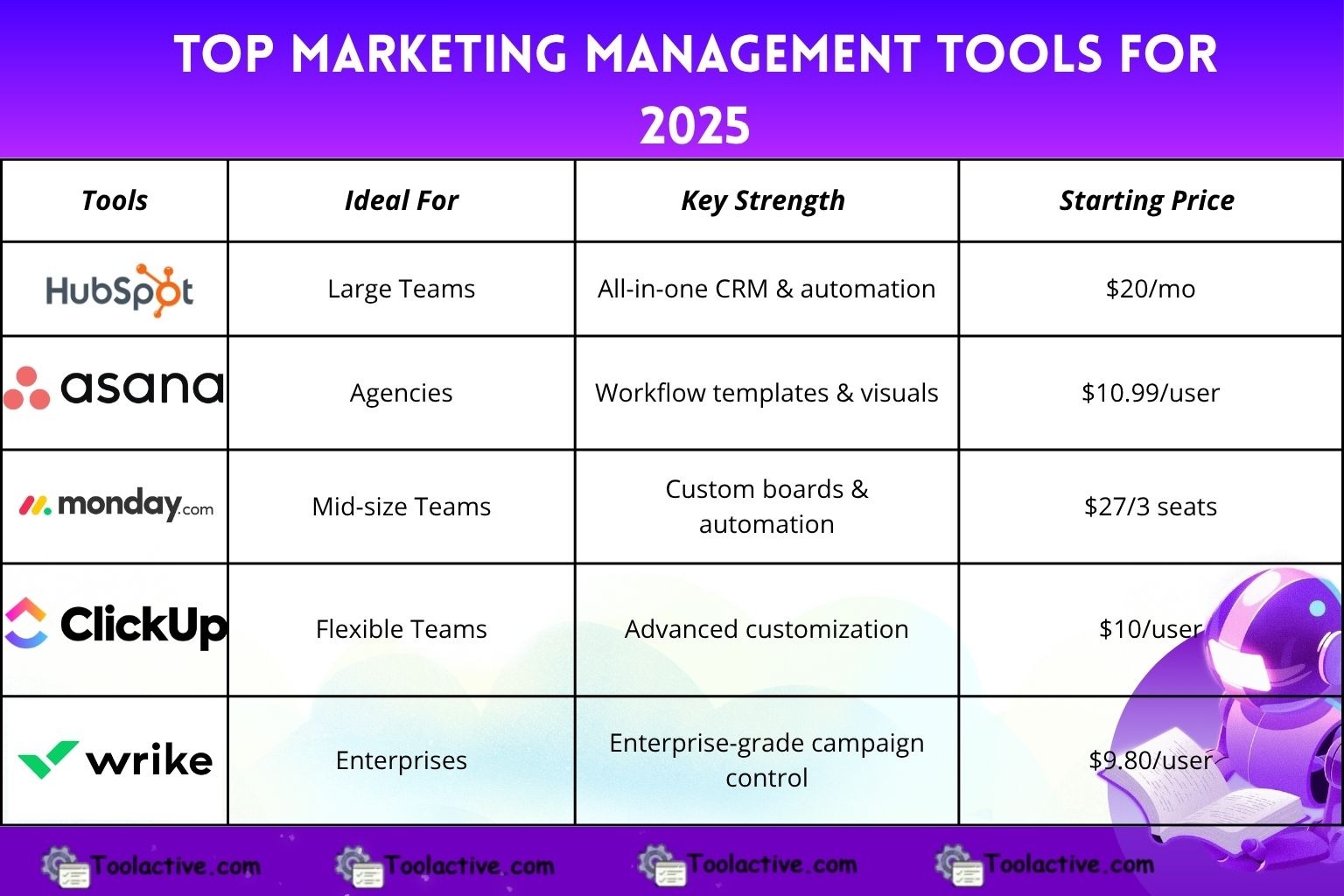
Pricing: Free plan available. Paid plans start at $20/month (Starter); advanced features from $890/month (Professional).
Best for: Medium to large teams that need a complete inbound marketing ecosystem.
3.2 Asana Marketing Cloud
Asana Marketing Cloud is a game-changer for teams managing multiple campaigns simultaneously. It goes beyond simple task management by providing marketing-specific workflow templates, detailed campaign dashboards, and automated workload balancing through AI.
You can map out every stage of a campaign - from creative requests to delivery - using Gantt charts, timelines, and Kanban boards. The visual clarity ensures that deadlines are met and responsibilities are clear across all departments.
The tool also includes goal tracking and cross-functional reporting, enabling marketers to tie every task to business objectives. Asana’s collaboration tools allow for quick feedback loops, making it easier to launch campaigns faster without compromising quality.
What you’ll like:
-
Intuitive, visual task management (Timeline, Calendar, Kanban)
-
Real-time collaboration with comments, file attachments, and approvals
-
Automated workflow creation using AI templates
-
Custom dashboards for campaign metrics and performance
What you may not like:
-
Complex for first-time users managing smaller projects
-
Reporting customization could be improved
Pricing: Free plan for individuals. Paid plans start at $10.99/user/month (Premium).
Best for: Agencies and marketing teams needing visual task management and team coordination across multiple campaigns.
3.3 Monday.com Marketing Suite
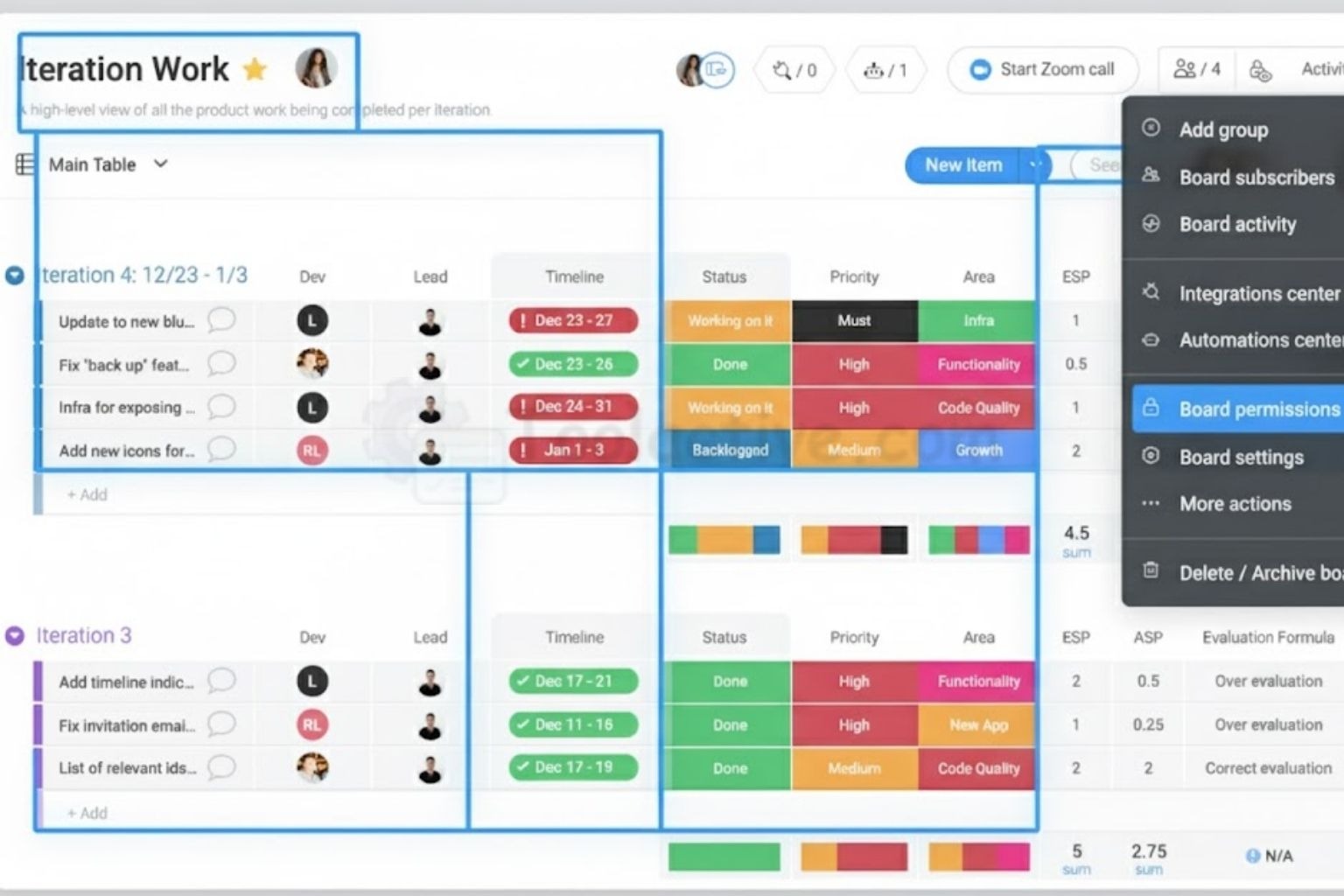
Monday.com, one of the most versatile marketing management platforms, simplifies marketing workflows, project tracking, and collaboration. It’s built for dynamic marketing teams that handle multiple projects, creative assets, and ad campaigns simultaneously.
The platform’s customizable boards and workflow automation make it ideal for adapting to various marketing strategies. You can track campaign progress using Kanban, Timeline, or Calendar views, while automations handle repetitive tasks like status updates or approvals - saving hours of manual work.
What sets Monday.com apart is its collaborative environment. You can comment, tag team members, and share files seamlessly. The robust mobile app also ensures campaign tracking on the go.
What you’ll like:
-
Flexible boards to manage complex campaigns across teams
-
AI-powered automation to streamline repetitive work
-
Multiple view modes (Timeline, Calendar, Kanban)
-
Great mobile usability and digital workspace customization
What you may not like:
-
Reporting tools could be more advanced
-
Slightly pricey for smaller startups
Pricing: Free plan (2 seats). Paid plans start at $27/month for 3 seats.
Best for: Teams seeking a flexible and visual tool to manage campaigns, collaborate, and stay on budget.
3.4 ClickUp for Marketing Teams
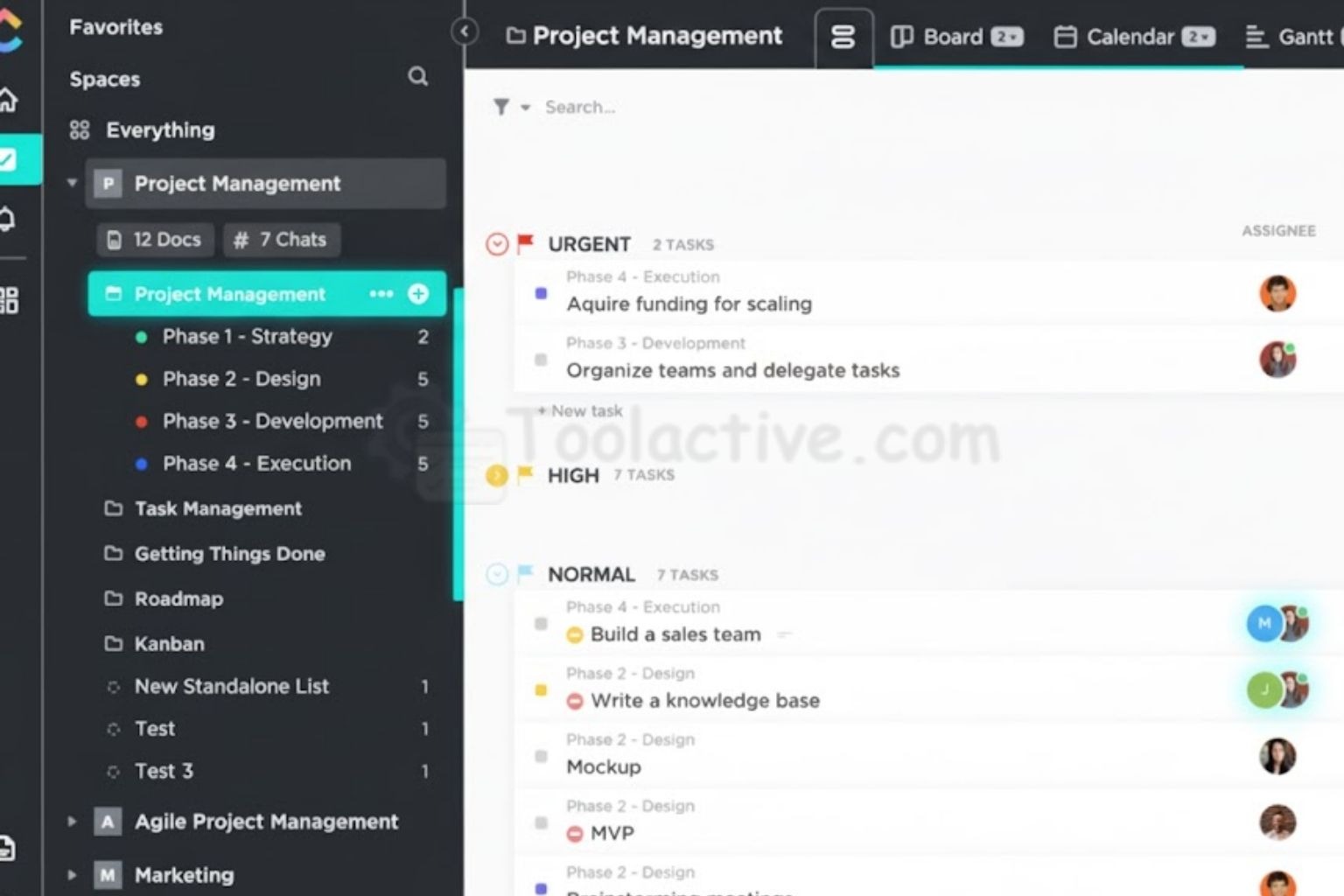
ClickUp is an all-in-one productivity and marketing management platform designed for teams that value flexibility and customization. From content calendars to campaign analytics, ClickUp allows marketers to manage every part of their workflow in one space.
Its AI writing assistant helps create briefs, summarize project updates, and identify task bottlenecks automatically. You can view projects in multiple formats - Gantt charts, List, or Board view - and create custom dashboards to track campaign KPIs in real time.
What makes ClickUp stand out is its adaptability. Whether you’re managing an email drip campaign or a full product launch, you can tailor every field, automation, and view to your specific process.
What you’ll like:
-
Highly customizable workflows with AI task suggestions
-
Excellent analytics dashboards for campaign tracking
-
Integrated document editor and chat for seamless collaboration
-
Real-time time tracking and performance metrics
What you may not like:
-
Slightly overwhelming interface for new users
-
Occasional performance slowdowns with large datasets
Pricing: Free plan available. Paid plans start at $10/user/month.
Best for: Marketing teams that want customizable automation and advanced reporting in one flexible system.
3.5 Wrike for Marketers
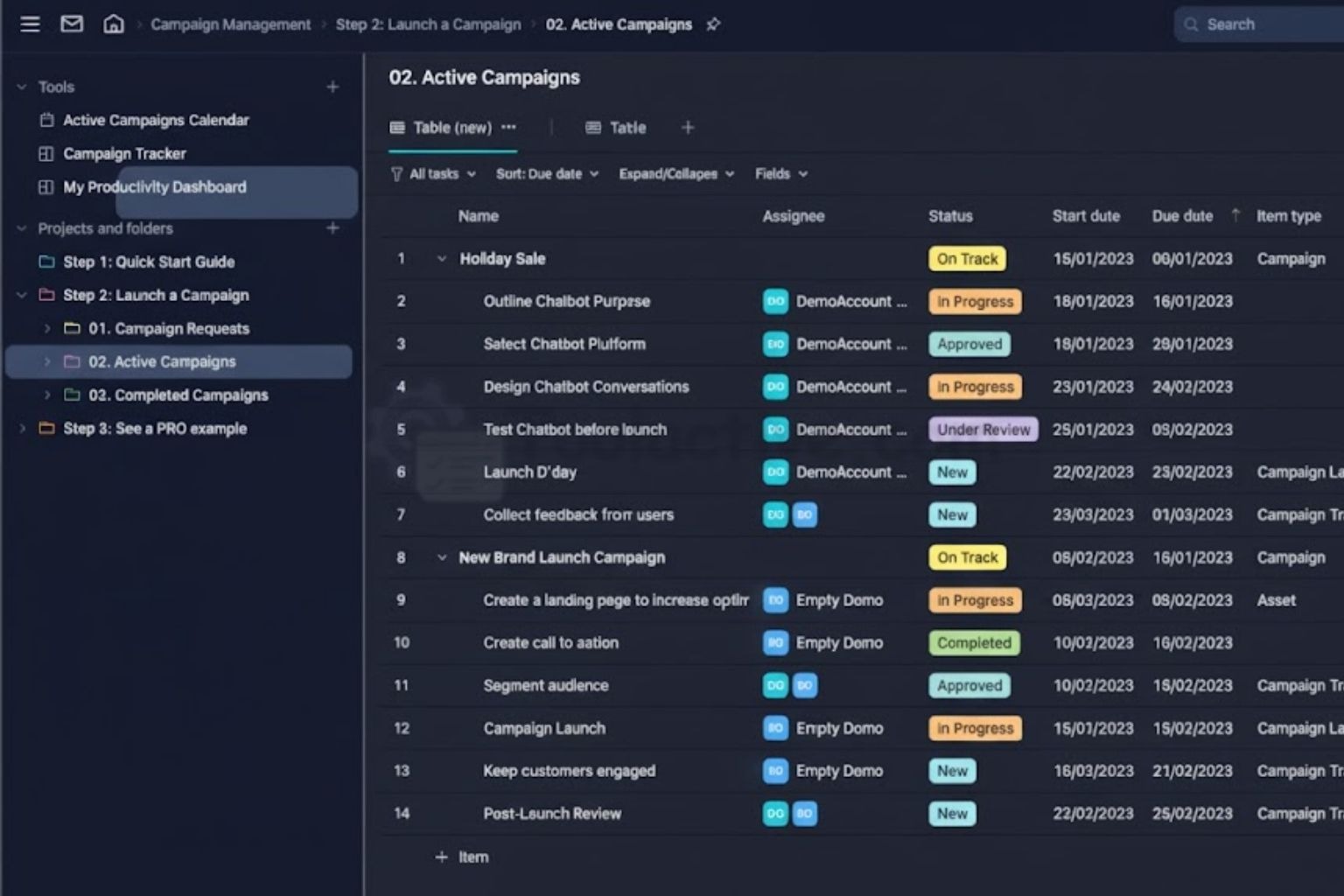
Wrike for Marketers is built for enterprise-level marketing operations, offering precision control over large campaigns, assets, and approvals. It’s the go-to platform for marketing teams that need structured collaboration and advanced project tracking.
Wrike’s request forms and proofing tools make creative production seamless, while AI-based project risk prediction helps spot bottlenecks before they happen. The built-in resource management module ensures balanced workloads and improved team performance.
You can visualize campaigns using Gantt charts, timelines, and customizable dashboards - perfect for managing high-volume marketing campaigns across departments.
What you’ll like:
-
Enterprise-grade campaign planning and approval system
-
AI-powered task prediction and workload optimization
-
Excellent creative review and asset management tools
-
Highly secure, with advanced role-based permissions
What you may not like:
-
Steeper learning curve for non-enterprise users
-
Limited integrations in lower-tier plans
Pricing: Free plan for individuals. Paid plans start at $9.80/user/month (Team).
Best for: Large organizations managing complex marketing workflows across multiple teams or clients.
Summary Comparison Table
4. Essential Features to Look for in a Marketing Management Tool
4.1 Campaign Automation
Automation is the foundation of modern marketing. Look for tools that automate repetitive tasks - from email follow-ups to reporting - freeing your team for strategy and creativity.
4.2 Analytics and Reporting
Powerful analytics dashboards help marketers see what’s working and what isn’t. Real-time insights lead to smarter decisions and optimized budgets.
4.3 Integration Capabilities
Seamless integrations with CRM, analytics, and ad platforms are critical for unified data flow and consistent performance tracking.
4.4 AI-Powered Insights
AI helps forecast campaign outcomes, segment audiences intelligently, and suggest best-performing content - transforming manual marketing into predictive strategy.
4.5 Collaboration Tools
Built-in messaging, file sharing, and approval systems keep everyone aligned and productive, even in hybrid or global teams.
5. User Persona & Use Cases
5.1 User Personas
-
Digital Marketing Managers: Oversee campaign execution, analyze data, and align teams across multiple channels.
-
Content Strategists: Plan, produce, and publish consistent content using integrated tools
-
Agency Owners: Manage client campaigns, deadlines, and reports efficiently in one place.
-
Small Business Owners: Simplify marketing without hiring a large team, leveraging automation and templates.
5.2 Use Cases
-
Cross-Channel Campaigns: Use AI to manage Facebook, Google, and email campaigns within one dashboard.
-
Content Workflow Management: Schedule and approve blogs, ads, and email content with real-time feedback.
-
Performance Optimization: Automatically generate weekly reports on CTR, engagement, and ROI.
If you want to explore more support automation tools, you can check out our list of ai tools for email marketing.
6. How AI Is Changing Marketing Management
6.1 Predictive Campaign Optimization
AI analyzes user behavior and predicts campaign performance, allowing marketers to adjust strategies before launching.
6.2 Hyper-Personalization
From subject lines to visuals, AI tools customize content for each user segment, increasing engagement and conversion rates.
6.3 Intelligent Workload Distribution
AI systems assign tasks dynamically based on team performance, helping balance workloads and improve efficiency.
7. Choosing the Right Marketing Management Tool
7.1 Define Your Marketing Goals
Start with clarity - what do you want to achieve? Increased engagement, faster project delivery, or better reporting?
7.2 Consider Team Size and Structure
A solo marketer needs automation and simplicity, while enterprises need advanced collaboration and integration tools.
7.3 Evaluate Usability and Scalability
The best tool grows with your team. Test usability, onboarding time, and how it scales with increasing campaigns.
7.4 Check Customer Support and Community
A responsive support system and active community ensure smoother onboarding and problem-solving.
8. Expert Insight: Jason Miller’s Perspective
As someone who’s been in marketing for over 15 years, I’ve seen tools evolve from basic spreadsheets to full-scale AI ecosystems. My experience has taught me one thing - technology doesn’t replace creativity; it enhances it.
When I first adopted tools like HubSpot and ClickUp, my team reduced manual reporting time by nearly 60%. But what truly mattered was how these platforms empowered us to focus on strategy over process.
If you’re choosing a marketing management tool, don’t chase trends - chase efficiency. Look for platforms that give you control, clarity, and creative freedom. The right tool doesn’t just organize your work - it transforms how you think about marketing.
9. Future of Marketing Management Software
The next generation of marketing tools will focus on AI-driven automation, voice-based task management, and real-time predictive analytics. As AI learns from user data, marketers will spend less time on operations and more on storytelling - creating authentic, data-informed campaigns.
Check our WATI collection
10. FAQs — Best Marketing Management Tool for Smarter Campaigns 2025
1. What is a marketing management tool?
It’s a platform that helps teams plan, execute, track, and optimize marketing campaigns across multiple channels in one centralized workspace.
2. Why do marketers need a marketing management tool in 2025?
Because campaigns are faster, more complex, and more data-driven than ever. These tools help streamline workflows, reduce manual work, and improve collaboration.
3. What features should I look for in a marketing management platform?
Key features include: campaign planning, workflow automation, content calendars, analytics dashboards, asset management, and integrations with CRM or ad platforms.
4. Do these tools help with AI-powered automation?
Yes—most leading platforms now include AI features such as performance predictions, automated task assignment, copy generation, and campaign optimization suggestions.
5. Can small teams benefit from marketing management tools?
Absolutely. Smaller teams often get the biggest productivity boost because the tools replace manual spreadsheets and scattered communication channels.
6. How do these platforms improve team collaboration?
They centralize tasks, comments, approvals, and files so everyone sees updates in real time—reducing confusion and miscommunication.
7. Are marketing management tools expensive?
Pricing varies. Many offer free tiers or starter plans suitable for small teams, with advanced automation and analytics available in higher tiers.
8. Do marketing management tools integrate with popular apps?
Yes. Most connect with tools like HubSpot, Google Analytics, Slack, Meta Ads, and email marketing software.
9. What’s the biggest benefit of using a marketing management tool?
Consistency. Your team stays aligned, your campaigns stay organized, and your data stays accurate—leading to smarter decisions and better ROI.
10. How do I choose the best tool in 2025?
Match the tool to your workflow:
-
For automation → HubSpot or ActiveCampaign
-
For visual workflows → Monday.com or Asana
-
For creative approvals → Wrike
-
For all-in-one management → ClickUp
11. Conclusion: Power Your Strategy with ToolActive
The future of marketing is intelligent, integrated, and automated - and it begins with the right marketing management tool. From campaign scheduling to AI-powered insights, these platforms make your marketing smarter, faster, and more human.
At ToolActive, we help marketers discover, compare, and evaluate the best tools for their goals. Our mission is to simplify your decision-making with verified insights and real-world reviews - so every click, campaign, and connection drives measurable growth.
Your marketing doesn’t need more tools - it needs the right one.




.jpg)