

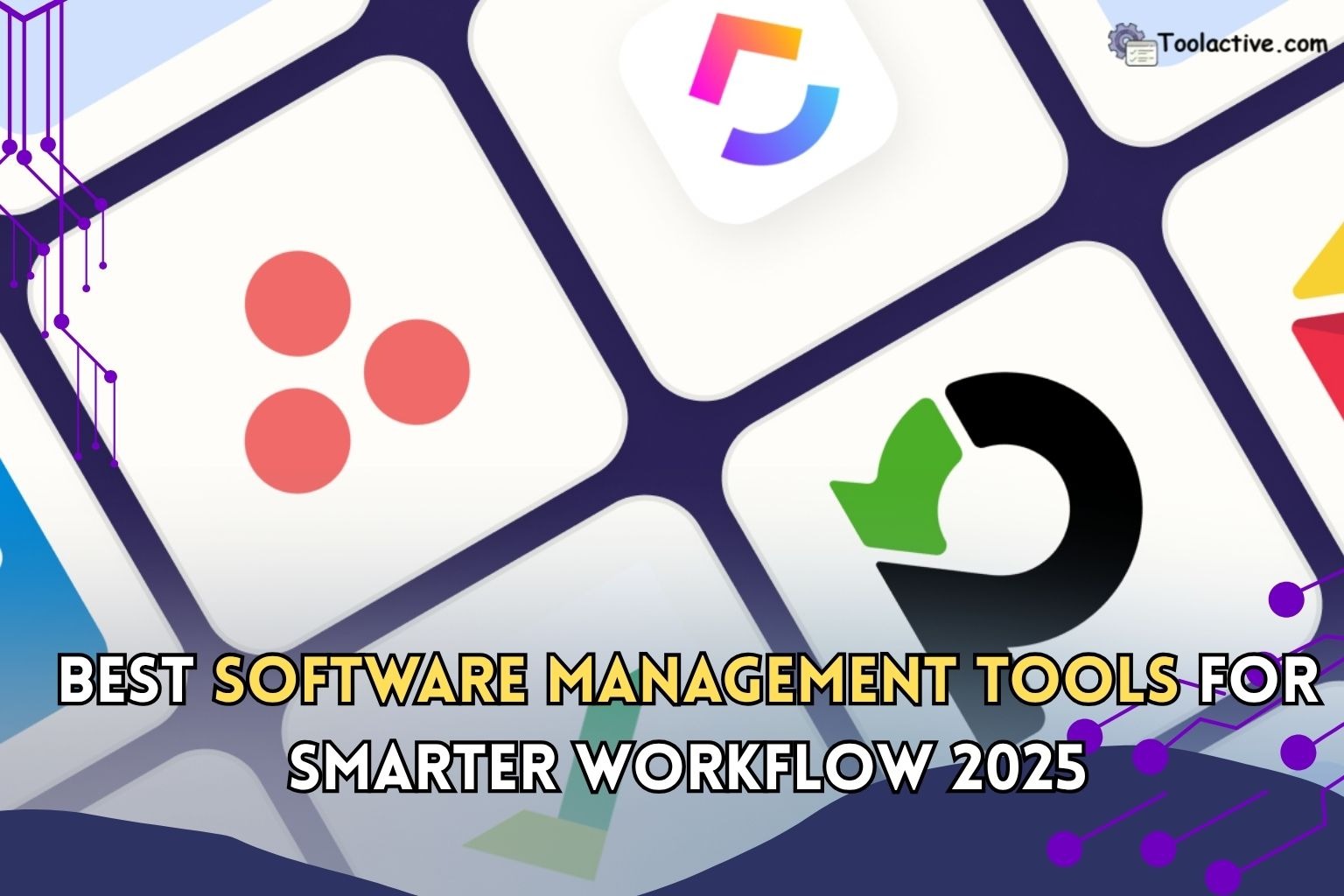
In today’s hyper-digital world, managing projects, teams, and workflows isn’t just about staying organized - it’s about staying competitive. The rapid rise of AI-powered software management tools has completely reshaped how companies plan, execute, and deliver results. Whether you’re leading a startup, running enterprise operations, or managing software development teams, the right tools can be your ultimate productivity multiplier.
The challenge? The market is flooded with countless tools - each claiming to be the best. That’s why we’ve done the research for you. In this complete guide, we’ll explore the best software management tools, analyze how task management AI enhances efficiency, and compare top platforms that empower modern teams to work smarter, not harder.
Before going deeper into the next section, you can refer to ai task management to support your work.
1. Understanding Software Management Tools
1.1 What Are Software Management Tools?
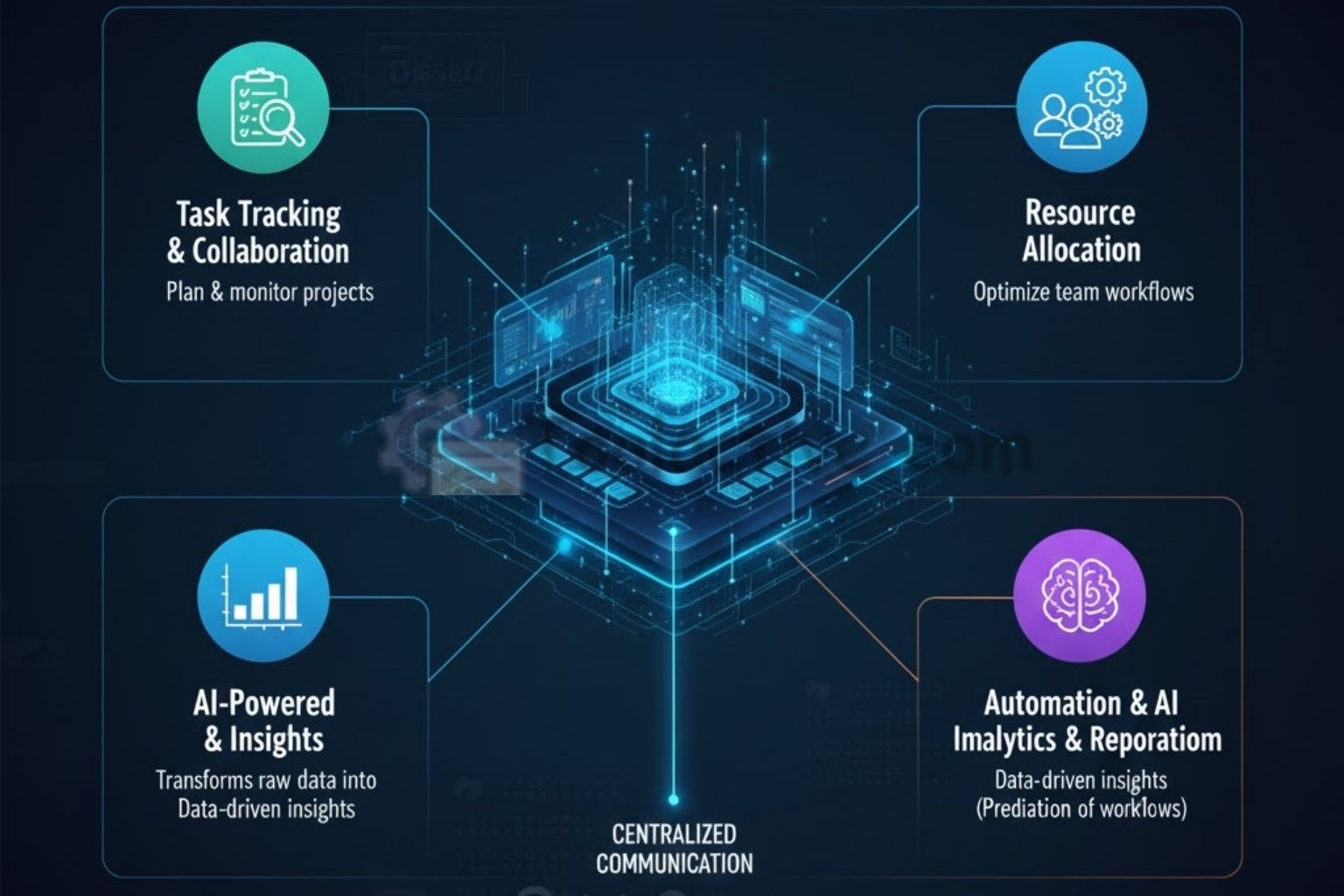
Software management tools are digital platforms designed to help teams plan, execute, and monitor projects more efficiently. They combine features such as task tracking, collaboration, resource allocation, reporting, and AI-powered automation to create a unified workspace where productivity thrives.
Modern software management tools go far beyond simple task lists - they integrate AI for predictive analytics, automate repetitive workflows, and centralize communication across departments.
In short: they turn chaos into clarity.
1.2 Why Businesses Need Them
Whether you manage creative campaigns, product launches, or software sprints, efficient management determines success. According to a PMI study, organizations that adopt advanced management tools see 28% higher project success rates and a significant reduction in wasted effort.
Key reasons why these tools are essential:
-
Centralized control: All data and workflows in one place
-
Automation: Reduce repetitive manual tasks
-
Data-driven insights: Real-time analytics for better decisions
-
Scalability: Adaptable to teams of any size
-
Collaboration: Improve team alignment and communication
1.3 The Rise of AI in Task Management
Artificial Intelligence has become the silent partner in project success. AI-powered management tools don’t just track progress; they predict bottlenecks, optimize schedules, and prioritize workloads.
Some of the latest features include:
-
AI-based task allocation (auto-assign tasks based on skill and workload)
-
Predictive deadlines (AI predicts when tasks might fall behind)
-
Smart automation (trigger actions automatically, e.g., send updates or reminders)
-
Natural Language Processing (NLP) assistants for faster planning
2. Key Features of the Best Software Management Tools
To identify the best software management tools, we analyzed dozens of platforms based on versatility, scalability, AI capability, and usability.
2.1 Project Planning and Scheduling
A great tool should make planning intuitive. Features such as Gantt charts, Kanban boards, calendar sync, and timeline views let teams visualize project flow from start to finish.
2.2 Collaboration and Communication
Built-in chat, comments, file sharing, and integrations (Slack, Google Workspace, Zoom) ensure teams stay connected without switching between multiple apps.
2.3 Task Management AI
AI-powered assistants now automatically categorize tasks, identify dependencies, and even adjust timelines. Tools like ClickUp, Asana, and Notion AI use smart suggestions to keep projects on track.
2.4 Reporting and Analytics
Real-time dashboards provide transparency. Managers can monitor KPIs, track budgets, and evaluate workload balance in one interface.
2.5 Integration Ecosystem
The best tools integrate seamlessly with CRMs, finance apps, developer tools, and marketing platforms - ensuring your workflow remains connected.
3. The Top Software Management Tools for 2025
Below is a detailed breakdown of the top-rated tools leading the project management landscape in 2025. Each one was selected based on features, AI innovation, scalability, and pricing flexibility.
3.1 Monday.com – The All-in-One Management Powerhouse
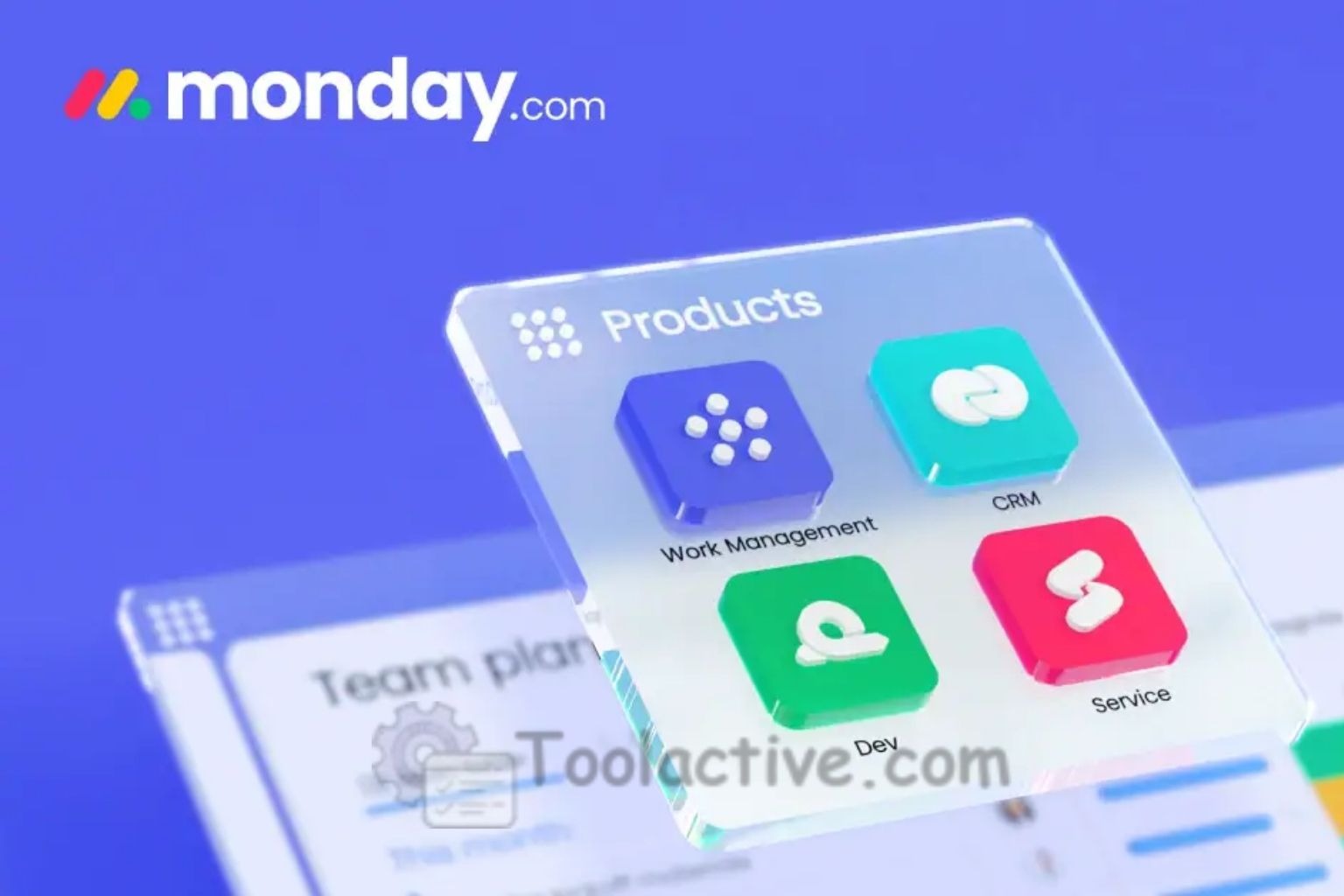
Monday.com is one of the most versatile software management tools available today. Designed for marketing teams, developers, and enterprise operations, it offers a flexible workspace that can adapt to nearly any project type.
With customizable boards, automation recipes, and smart integrations, Monday.com simplifies everything from campaign management to software tracking.
Key Features:
-
Customizable workflows and templates
-
Kanban, Timeline, and Gantt views
-
Built-in time tracking and workload management
-
200+ integrations (Slack, Google Drive, HubSpot)
-
AI-powered automation for repetitive tasks
What’s Great:
-
Flexible customization for different departments
-
Powerful collaboration tools with real-time updates
-
Visually intuitive dashboards
What Could Improve:
-
Higher-tier plans can get expensive
-
Advanced reporting requires premium subscription
Pricing: Free plan available; paid plans start at $9 per user/month.
Best for: Teams looking for an all-in-one, visual, and scalable management system.
3.2 Asana – Best for AI-Enhanced Workflow Coordination
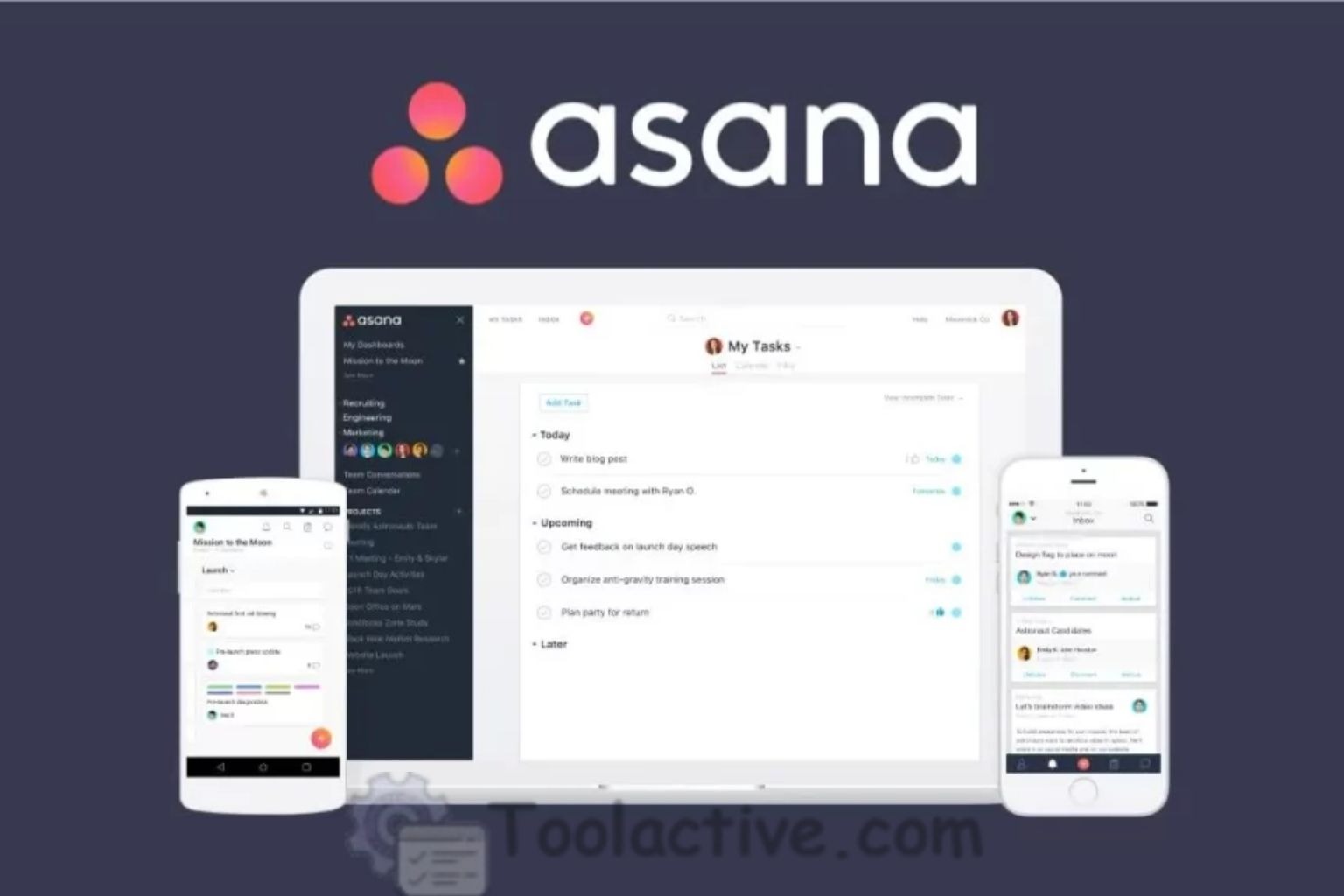
Asana continues to dominate as one of the most AI-driven project management tools. Known for its clarity and automation, Asana empowers teams to visualize progress, align priorities, and automate routine actions effortlessly.
Its new AI Work Graph™ helps organizations predict resource constraints and identify risks before they impact deadlines.
Key Features:
-
Task lists, Kanban, and Gantt views
-
AI-driven Work Graph for predictive insights
-
Workflow builder and automation triggers
-
Integration with 200+ apps
What’s Great:
-
Strong focus on productivity optimization
-
Excellent automation for recurring tasks
-
Real-time performance tracking
What Could Improve:
-
Steeper learning curve for new users
-
Premium features hidden behind paywalls
Pricing: Free basic plan; premium starts at $10.99 per user/month.
Best for: Teams needing structured, AI-optimized workflow automation.
3.3 ClickUp – Best for Multi-Department Collaboration
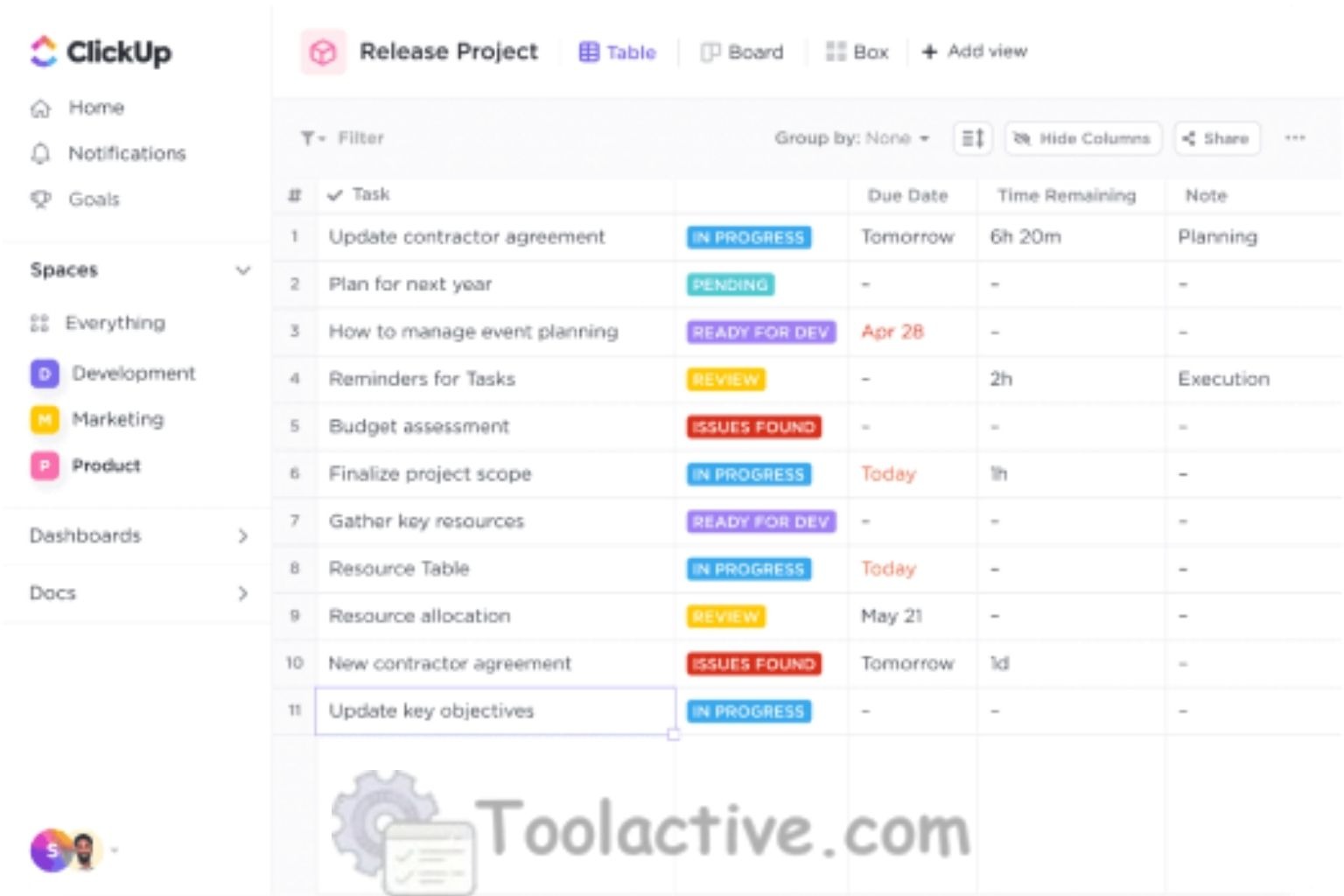
ClickUp is an all-purpose productivity and project hub that brings together task management, document creation, and goal tracking into a single platform.
It’s ideal for cross-functional teams thanks to its robust AI assistant, which generates task summaries, writes updates, and predicts workflow bottlenecks.
Key Features:
-
Comprehensive workspace for tasks, docs, and chats
-
ClickUp AI for smart automation and writing assistance
-
Custom dashboards and progress tracking
-
Workflow templates for agile teams
What’s Great:
-
Excellent for hybrid or remote teams
-
All-in-one platform replaces multiple tools
-
Smart automation and document creation
What Could Improve:
-
Interface can feel overwhelming at first
-
Occasional lag in complex workspaces
Pricing: Free forever plan; paid options start at $7 per user/month.
Best for: Teams managing complex, cross-departmental projects.
3.4 Wrike – Best for Enterprise-Level Project Management
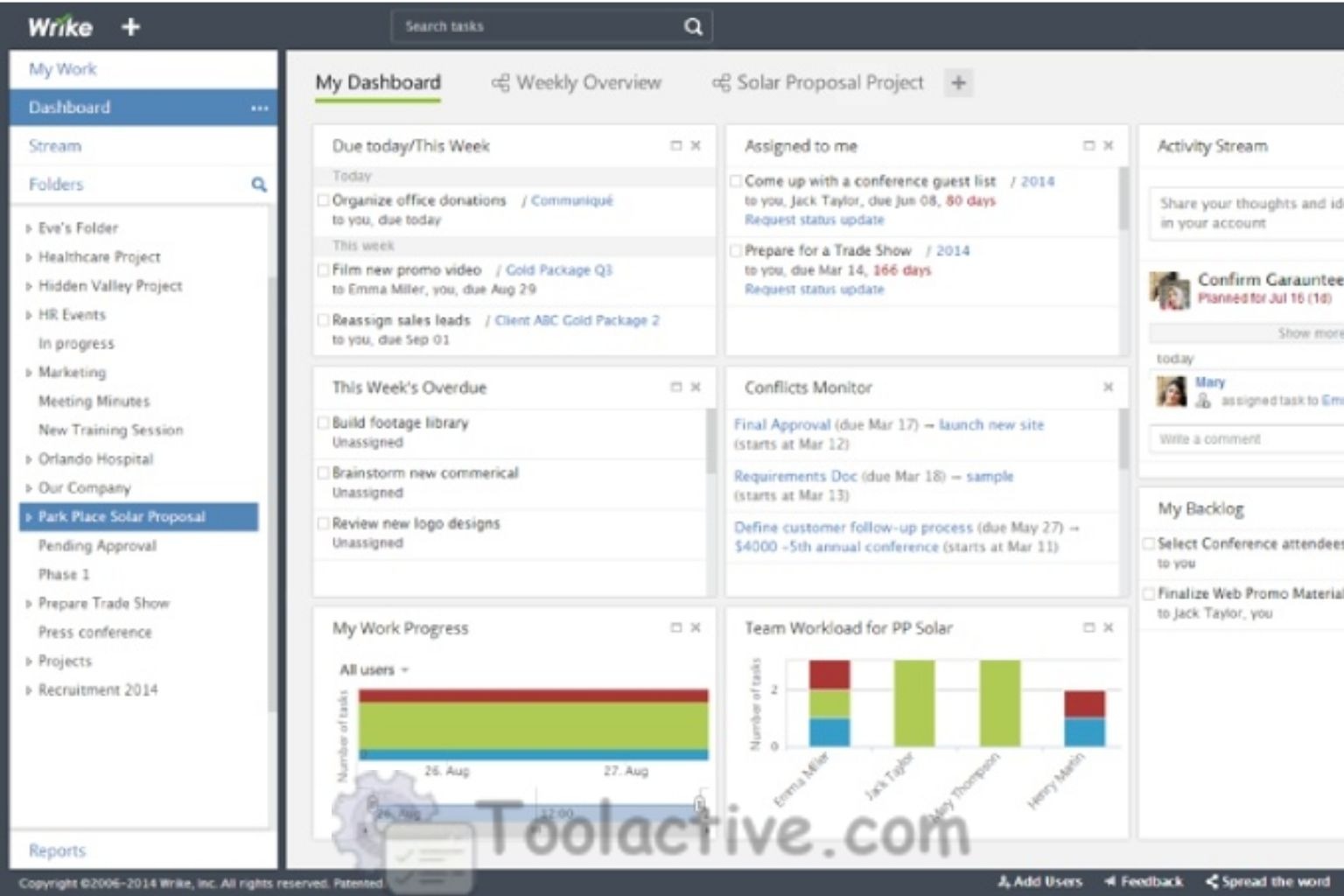
Wrike stands out as one of the best software management tools for large enterprises that need advanced scalability, control, and AI-powered automation. Designed with flexibility in mind, Wrike lets managers handle everything from creative campaigns to product launches and IT workflows - all within one unified platform.
Its AI Work Intelligence™ feature uses machine learning to analyze project data, forecast risks, and even recommend task prioritization.
Key Features:
-
Custom dashboards and request forms
-
Dynamic Gantt charts and workload balancing
-
Real-time reports and performance analytics
-
Cross-department automation
-
AI-based risk prediction
What’s Great:
-
Ideal for enterprise-scale projects
-
High-level automation and resource allocation
-
Deep customization across departments
What Could Improve:
-
Interface complexity for new users
-
Premium plans can be pricey for small teams
Pricing: Free plan for small teams; professional plan starts at $9.80 per user/month.
Best for: Large organizations handling multiple complex workflows.
3.5 Jira – Best for Software Development Management
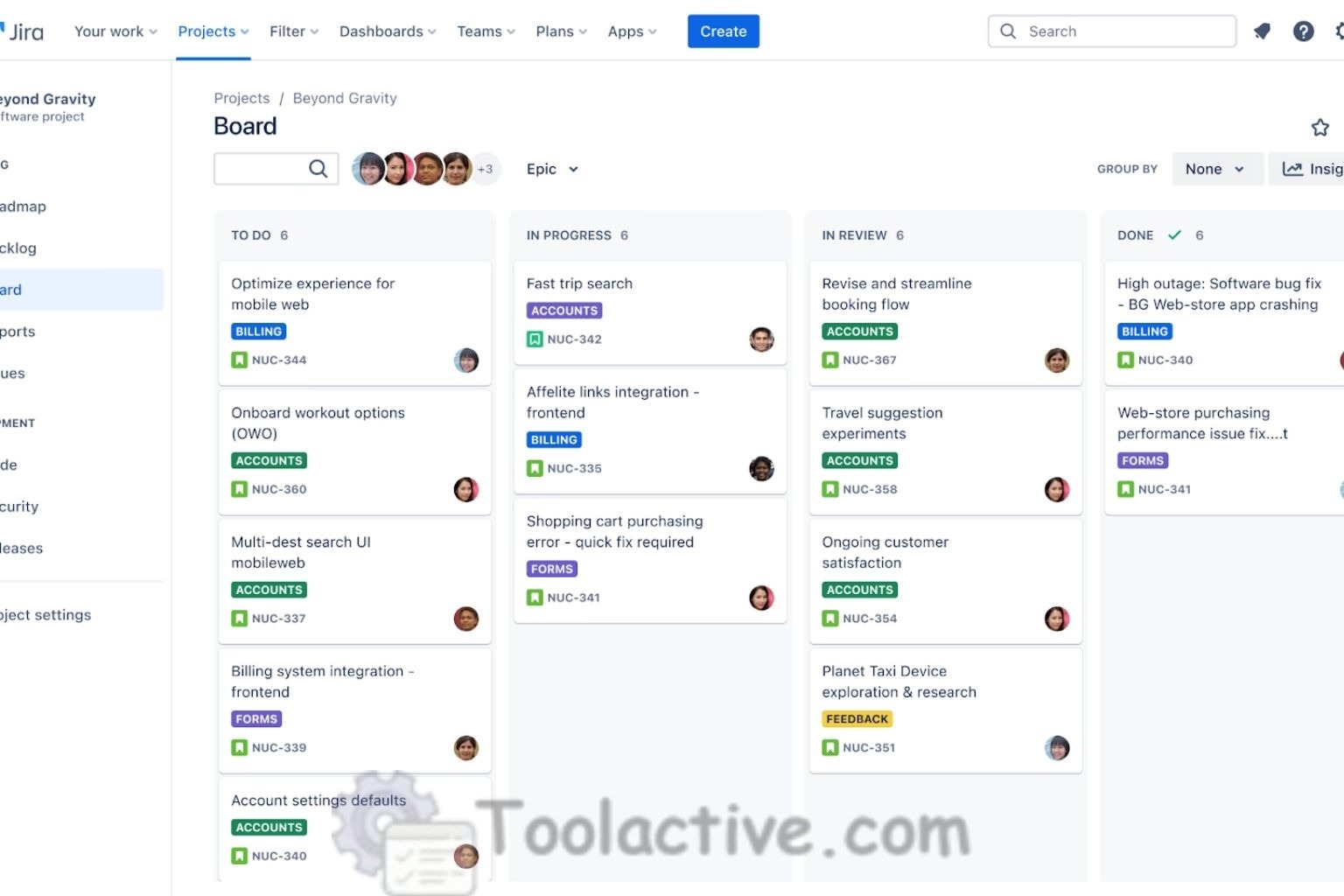
When it comes to software development management tools, Jira remains unmatched. It’s specifically built for agile teams, enabling sprint planning, bug tracking, and developer collaboration in one place.
Now enhanced with AI-powered issue detection and automation, Jira helps development teams plan smarter and release faster.
Key Features:
-
Agile boards (Scrum, Kanban, or hybrid)
-
Issue and bug tracking
-
Custom workflows and sprint planning
-
AI-powered automation and reporting
-
Deep integrations with GitHub, Bitbucket, and Confluence
What’s Great:
-
Unrivaled for software and product development
-
Deep customization with integrations
-
Built-in AI insights for backlog prioritization
What Could Improve:
-
Limited flexibility for non-technical teams
-
UI can feel heavy for simple projects
Pricing: Free for up to 10 users; standard plan from $8.15 per user/month.
Best for: Developers, product managers, and agile software teams.
3.6 Trello – Best for Simplicity and Visual Task Management
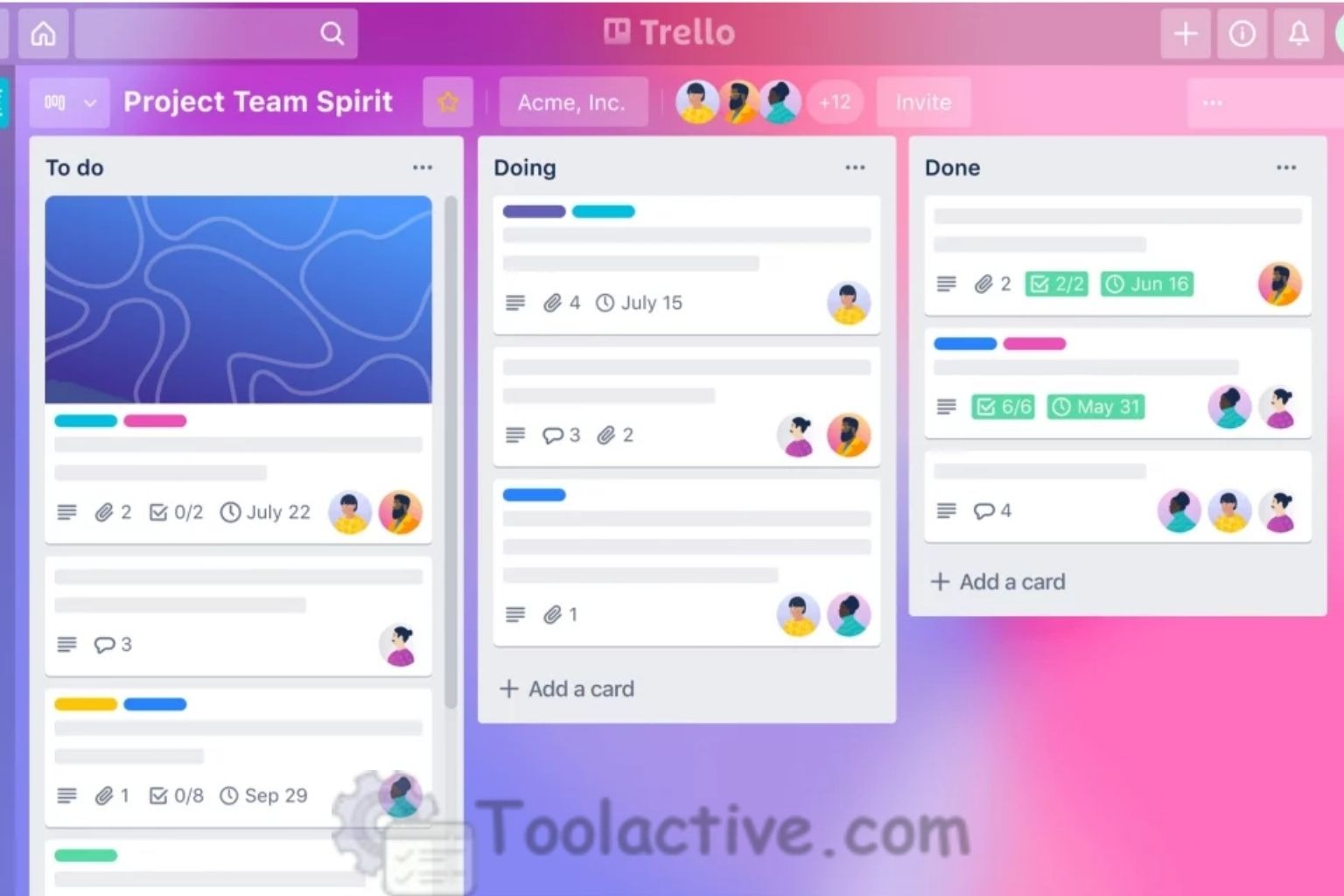
Trello remains one of the most intuitive task management tools for individuals and small teams. Its Kanban-style boards are perfect for visually tracking progress while staying organized.
Recent updates added automation powered by Butler AI, which can automatically assign tasks, set reminders, or trigger actions based on project activity.
Key Features:
-
Visual Kanban interface
-
AI-driven Butler automation
-
Integrations with Slack, Google Drive, and Jira
-
Custom templates for content, marketing, and product teams
What’s Great:
-
Extremely easy to use
-
Ideal for freelancers or small teams
-
AI automation reduces manual updates
What Could Improve:
-
Limited scalability for enterprise use
-
Reporting tools are fairly basic
Pricing: Free plan available; premium plans start at $5 per user/month.
Best for: Small teams or startups managing straightforward workflows.
3.7 Notion – Best for Flexible Team Knowledge and Content Management
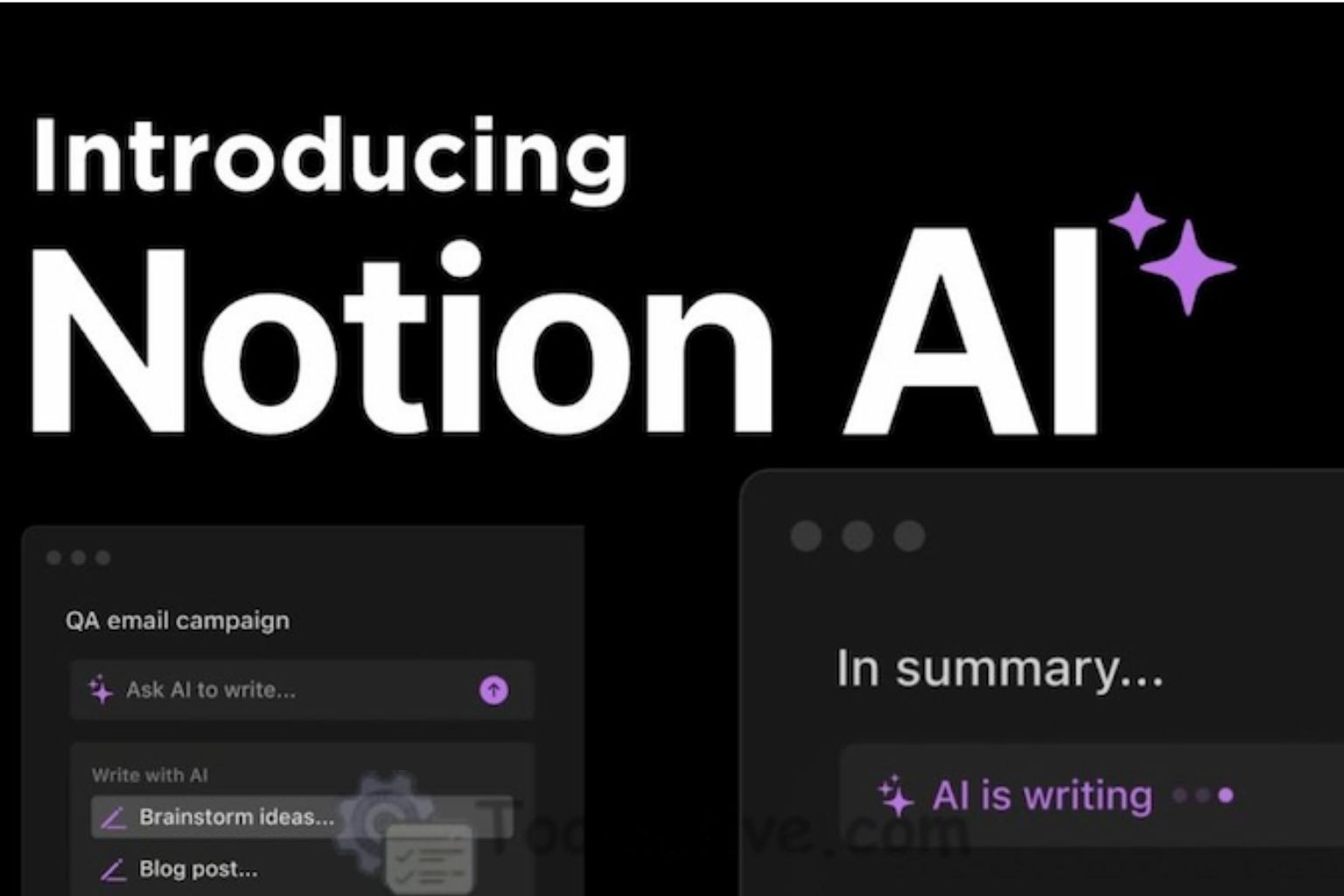
Notion has evolved from a note-taking app to a complete team management platform. It combines task management, document collaboration, and AI assistance in one minimal, beautiful interface.
With Notion AI, users can summarize meeting notes, draft reports, or brainstorm ideas instantly - making it ideal for creative and content teams.
Key Features:
-
Task boards, docs, and databases in one place
-
Notion AI for summarization and writing
-
Collaborative workspaces with custom templates
-
Integration with Slack, Figma, and Zapier
What’s Great:
-
Combines creativity and structure
-
Perfect for teams needing content collaboration
-
Clean interface and customizable layouts
What Could Improve:
-
Limited advanced project tracking features
-
Performance may slow with large databases
Pricing: Free personal plan; team plan starts at $8 per user/month.
Best for: Creative, marketing, and content-driven teams.
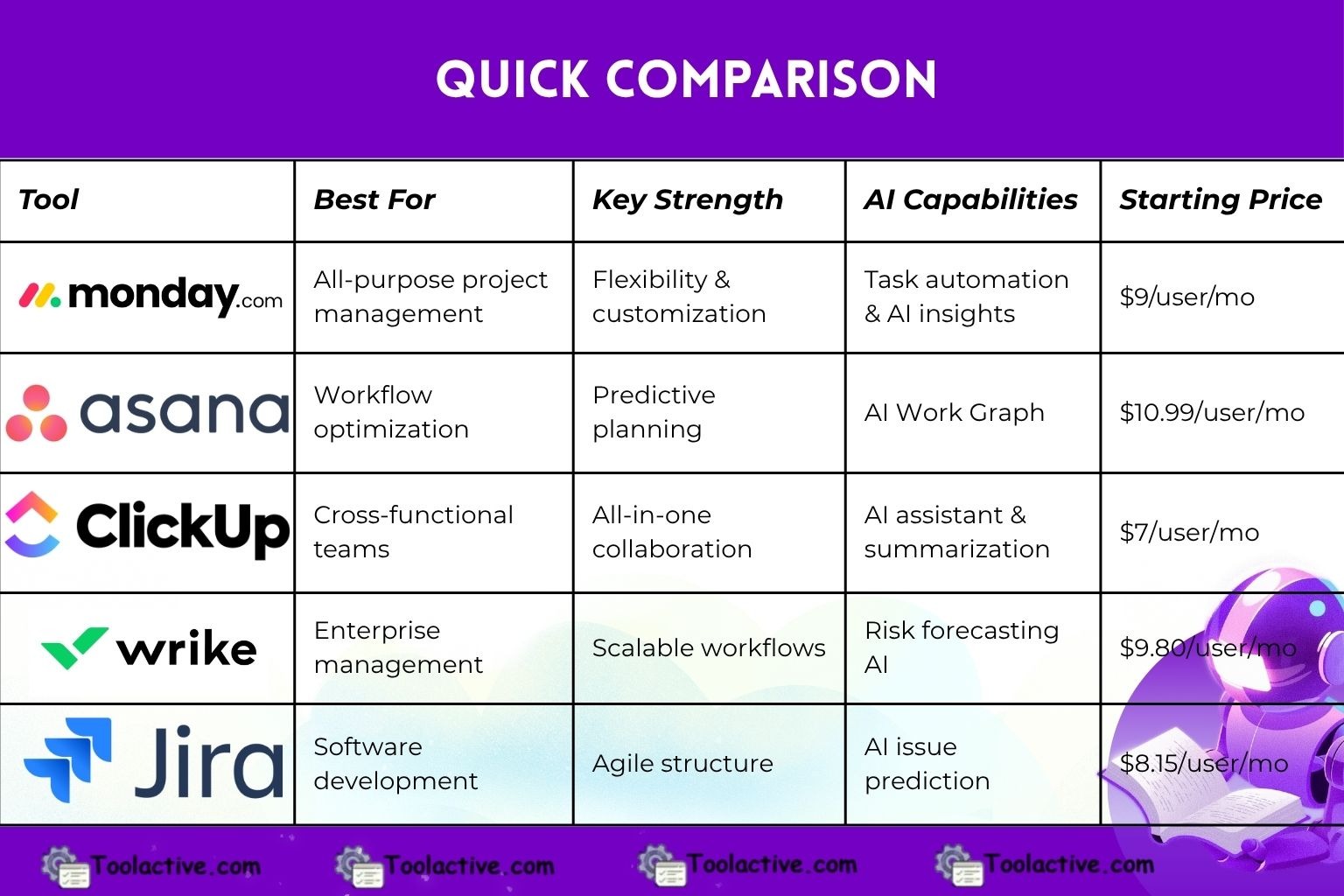
4. Comparative Overview: The Top 5 Management Tools
5. Emerging Trends in Software Management for 2025
5.1 AI-Driven Predictive Workflows
AI no longer just tracks what’s happening - it predicts what’s next. Advanced tools like Wrike and Asana now use historical data to identify risk factors and automatically adjust project timelines.
5.2 Integration Ecosystems
The future of project management is interconnected. Companies prefer software that can integrate seamlessly with CRMs, marketing tools, code repositories, and finance systems.
5.3 Custom Automation
Tools are evolving to allow no-code automation, enabling non-technical users to build custom workflows that match their team’s exact processes.
5.4 Smart Reporting and Insights
Dashboards are becoming smarter and more visual, helping leaders make informed decisions without digging into spreadsheets.
If you want to explore more automation support tools, you can see the list of marketing management tool.
6. User Personas & Real-World Use Cases
6.1 For Marketing Teams
Marketing departments use tools like Monday.com and Asana to plan campaigns, track creative assets, and coordinate launches.
Use case: Automating social media approvals and content calendar updates through AI.
6.2 For Software Developers
Developers rely on Jira and ClickUp for agile sprint planning, bug tracking, and version control integration.
Use case: Predictive AI that flags sprint delays before they occur.
6.3 For Creative Agencies
Agencies use Notion and Wrike to manage client briefs, design tasks, and feedback loops in real time.
Use case: AI-driven content summarization and creative approval automation.
6.4 For Enterprises
Enterprises leverage Wrike or Asana Business to align departments, manage resources, and analyze performance.
Use case: Automated workload balancing across global teams.
7. Expert Insights: What the Pros Say
We reached out to project management experts and digital transformation consultants to understand how AI tools are shaping the landscape:
“AI in management software isn’t replacing project managers - it’s amplifying them. Teams that adopt predictive automation and analytics see efficiency gains of over 40%.”
- Samantha Reed, Digital Operations Strategist
“The shift toward integrated ecosystems is massive. The best software management tools are now platforms, not products - adaptable to any team or industry.”
- Dr. Alex Turner, Project Innovation Consultant
“By 2026, nearly 70% of companies will run their workflows on AI-powered platforms that adapt dynamically to workload and performance data.”
- McKinley Insights, 2025 Report
8. Choosing the Right Tool for Your Business
When selecting a software management tool, consider:
-
Team size and structure – Freelancers vs. enterprises need very different features.
-
Workflow type – Agile, waterfall, or hybrid?
-
Integration needs – Does it sync with your existing apps?
-
AI requirements – Do you need automation, reporting, or predictive planning?
-
Budget and scalability – Start small but choose a tool that can grow with you.
9. Future of Software Management Tools
The next evolution of management platforms will focus on autonomous decision-making and predictive optimization. Imagine tools that automatically:
-
Reassign tasks based on performance analytics
-
Draft weekly summaries and project reports
-
Detect communication bottlenecks
-
Optimize team workload balance without human input
AI will not only streamline management - it will redefine it.
Explore our FastBots.ai store
10. Conclusion: Building Smarter, Faster, and Stronger Teams
In today’s fast-moving digital economy, the right software management tools don’t just organize your work - they empower your entire team to achieve more with less effort. These platforms combine automation, analytics, and AI to turn complex workflows into smooth, data-driven processes.
From Monday.com’s intuitive collaboration to Wrike’s enterprise scalability and Jira’s agile precision, each tool serves a unique purpose. But the real value lies in how these systems help you predict issues before they happen, streamline communication, and optimize productivity across every department.
AI isn’t replacing project managers - it’s enhancing their capabilities. The companies that adopt AI-powered management platforms early will lead the future of smart operations.
If you’re ready to find, compare, and optimize the tools that truly fit your business goals, explore detailed reviews and expert recommendations at Toolactive.com - your trusted destination for discovering the world’s best AI and software management solutions.
Work smarter. Manage better. Grow faster - with Toolactive.




.jpg)